Vivitrol: The Monthly Naltrexone Shot Explained
You're about to explore how Vivitrol, a monthly naltrexone injection, can transform addiction treatment. It works by blocking opioid receptors, reducing cravings for both opioids and alcohol. This disrupts the reward cycle, making it a strong ally in recovery when paired with therapy and support. Discover how its monthly administration improves adherence and why being opioid-free before treatment is essential. Interested in learning about how it compares to daily medications or its side effects?
Addressing Addiction With Vivitrol
When battling addiction, Vivitrol offers a promising solution by blocking the effects of opioids and reducing cravings.
It’s essential to combine this treatment with whole-person approaches to address the underlying causes of addiction. Engaging in therapies like cognitive-behavioral therapy can enhance your recovery process.
Building strong support systems, including family and community connections, plays an important role in maintaining sobriety.
Emphasizing a thorough strategy guarantees that you’re not only relying on medication but also reinforcing emotional and mental well-being.
What Is Vivitrol and How Does It Work?
Understanding how Vivitrol functions can enable you in your recovery.
Vivitrol is a monthly injection containing naltrexone, which blocks opioid receptors in your brain. This naltrexone mechanism prevents the euphoric effects of opioids and alcohol, reducing cravings and aiding in abstinence.
By disrupting the reward cycle, Vivitrol helps you focus on recovery without the temptation of substances.
Disrupting the reward cycle, Vivitrol aids recovery by minimizing substance temptation.
The long-term effects of Vivitrol can include sustained abstinence and improved overall well-being.
It's essential to use Vivitrol as part of a thorough treatment plan, including counseling and support, to maximize its effectiveness in your recovery efforts.
Liberation Way's helpline is free, confidential, and available 24/7. A treatment specialist can help you understand your options.
Call (866) 275-3142Top Advantages of Vivitrol Over Other Treatments
Although many treatments exist for addiction, Vivitrol offers distinct advantages over others. Unlike daily medications, Vivitrol is a monthly shot, reducing the risk of missed doses. This consistent delivery enhances treatment adherence.
Success stories frequently highlight its effectiveness in lowering relapse rates. In treatment comparison, Vivitrol stands out for its non-addictive nature, addressing both alcohol and opioid dependencies without the risk of misuse.
Additionally, it doesn't require detox prior to initiation for alcohol use disorder, streamlining the process. Patients often report improved compliance and satisfaction, contributing to its growing popularity in addiction recovery strategies.
Comparing Vivitrol to Daily Oral Medications
While exploring treatment options for addiction, you'll notice key differences between Vivitrol and daily oral medications. Vivitrol, a monthly injection, eliminates the need for daily adherence, reducing the risk of missed doses. In contrast, daily oral medications require consistent intake, demanding discipline and routine. Treatment flexibility is another factor; Vivitrol offers convenience with monthly visits, while oral medications allow for easier discontinuation or adjustments.
Here's a quick comparison:
| Aspect | Vivitrol | Daily Oral Medications |
|---|---|---|
| Dosing Frequency | Monthly | Daily |
| Adherence Requirement | Low | High |
| Treatment Flexibility | Less flexible | More flexible |
| Risk of Missed Doses | Low | High |
| Convenience | High | Moderate |
The Science of Naltrexone Explained
You might be wondering how naltrexone actually works in your body.
It interacts with opioid receptors in your brain, effectively blocking the euphoric effects associated with opioid use.
This mechanism helps reduce cravings and supports recovery efforts by preventing the rewarding sensations.
How Naltrexone Works
Understanding how naltrexone works starts with its role as an opioid receptor antagonist. It blocks opioid receptors, preventing opioids from producing their usual effects. This naltrexone mechanism reduces cravings and helps maintain sobriety. By occupying these receptors, it stops opioids from binding and triggering euphoria.
| Naltrexone Mechanism | Opioid Receptors | Effect on Body |
|---|---|---|
| Blocks receptors | Mu, kappa, delta | Reduces cravings |
| Antagonist action | Competitive | Prevents euphoria |
| Long-lasting effect | Monthly shot | Sustained sobriety |
| Non-addictive | No activation | Minimal side effects |
This method is a key tool in addiction treatment, promoting recovery.
Brain Receptor Interaction
Naltrexone's effectiveness hinges on its precise interaction with brain receptors. It works by binding to opioid receptors, significantly modulating them to restore neurotransmitter balance.
When you receive Vivitrol, naltrexone occupies these receptors, preventing them from activating. This modulation helps maintain a stable state in the brain's chemical environment, vital for managing addiction.
By doing so, naltrexone supports your recovery process, ensuring that neurotransmitter levels remain balanced. This interaction doesn't just block harmful effects; it fundamentally aids in recalibrating your brain's response to stimuli.
Understanding this mechanism highlights the importance of naltrexone in therapeutic settings for addiction treatment.
Blocking Opioid Effects
While exploring the science behind naltrexone, it’s vital to understand how it effectively blocks opioid effects. Naltrexone works by binding to opioid receptors in the brain, preventing opioids from attaching. This blockade helps reduce cravings and inhibits the euphoric effects associated with opioid use.
By doing so, naltrexone plays an important role in managing opioid tolerance and addiction neuroscience. It doesn’t activate the receptors, so you won't experience the high, helping you maintain sobriety. Additionally, it supports the resetting of brain pathways, aiding in recovery and reducing relapse risk.
This mechanism makes naltrexone a valuable tool in addiction treatment.
Who Is an Ideal Candidate for Vivitrol?
How do you know if Vivitrol is right for you? Ideal candidates are those committed to recovery from opioid or alcohol dependence and have completed detoxification.
You shouldn’t have any opioids in your system for at least 7-10 days before starting. Consider your treatment history and whether a monthly injection fits your lifestyle.
Ensure you're opioid-free for 7-10 days and assess if a monthly injection suits your lifestyle.
Vivitrol can be effective if you’ve struggled with daily medication adherence. It’s essential to weigh treatment considerations, such as your readiness to maintain sobriety and any potential interactions with other medications.
Always consult your healthcare provider to guarantee Vivitrol aligns with your recovery goals and health needs.
Managing Side Effects of Vivitrol
Although Vivitrol offers valuable support in recovery, it's important to be aware of potential side effects. Effective side effect management involves monitoring symptoms and adopting coping strategies.
Consider dietary considerations like balanced nutrition to support your body. Lifestyle adjustments, including regular exercise, can boost overall well-being and mitigate side effects.
Utilize support resources for emotional support, and don't hesitate to explore comprehensive approaches like mindfulness. Communication tips with healthcare providers are vital; always inform them about any side effects.
Stay proactive with these strategies to guarantee a smoother experience while benefiting from Vivitrol's support in your path to recovery.
Vivitrol’s Role in Recovery
Managing side effects effectively sets the stage for understanding Vivitrol's role in recovery. Vivitrol blocks opioid receptors, reducing cravings and helping prevent relapse. It's crucial to pair the treatment with strong support systems for long-term recovery success. Engaging in counseling, peer groups, and family support enhances outcomes. Vivitrol isn’t a standalone solution; it complements behavioral therapies and lifestyle changes.
Here’s how Vivitrol fits into recovery:
| Aspect | Impact |
|---|---|
| Craving Reduction | Lowers relapse risk |
| Support Systems | Boosts recovery efforts |
| Monthly Administration | Promotes adherence |
| Behavioral Therapies | Enhances effectiveness |
| Long Term Recovery | Sustains sobriety |
Incorporate these elements for ideal results.
What to Expect During Your Vivitrol Treatment
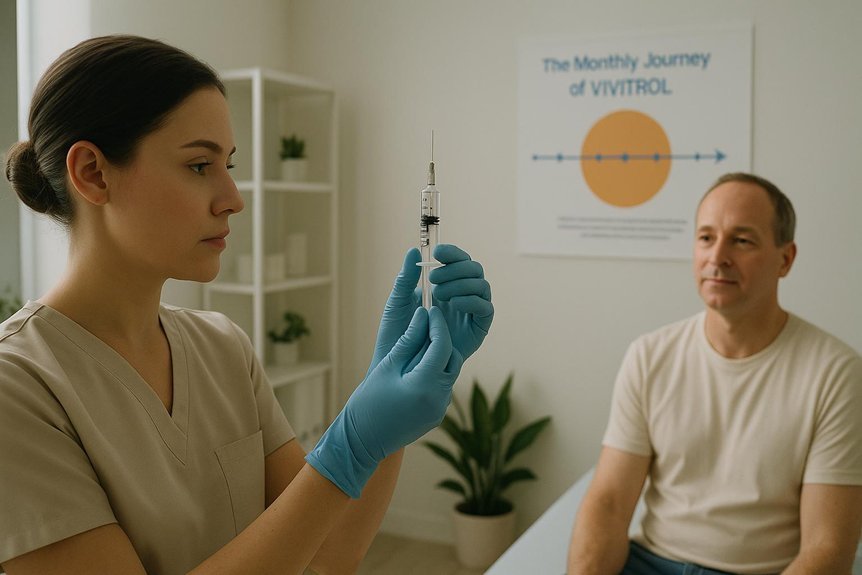
When you start Vivitrol treatment, you'll notice a structured approach that supports your recovery. Expect a monthly injection that blocks opioid and alcohol effects, reducing cravings.
A structured recovery process begins with a monthly Vivitrol injection, blocking opioid and alcohol effects.
You'll likely experience minimal side effects, often limited to injection site reactions. Many patients report a sense of stability and control, enhancing their commitment to sobriety.
Regular follow-ups are essential, guaranteeing the treatment aligns with your needs and expectations. Patient experiences highlight the importance of combining Vivitrol with counseling for best results.
Stay proactive in monitoring your progress, and communicate openly with your healthcare team to secure a successful treatment experience.
Talking to Your Doctor About Vivitrol
Discussing Vivitrol with your doctor is a vital step in your path to recovery. Start by sharing your treatment goals to guarantee Vivitrol aligns with your objectives.
Discuss your medication history, including any previous treatments for addiction, allergies, or side effects you've experienced. This information helps your doctor assess if Vivitrol is suitable for you.
Ask questions about how Vivitrol works, its benefits, and potential side effects. Understanding the commitment required, like attending monthly appointments, is essential.