
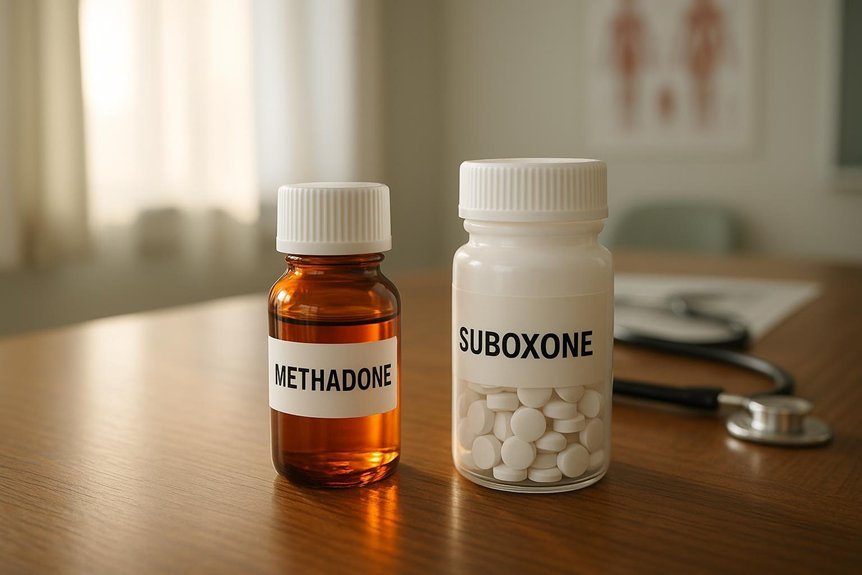
Methadone vs. Suboxone: Which Is Right for You?
When considering opioid treatment options, deciding between Methadone and Suboxone can feel overwhelming. You'll need to weigh factors like treatment goals, lifestyle compatibility, and potential side effects. Methadone offers structured support, while Suboxone provides more flexibility. Understanding these medications' nuances is key to making an informed choice. Here is how each option aligns with your recovery needs and what considerations might tip the balance in either direction.
Opioid Treatment Options Explained
When exploring opioid treatment options, it’s important to understand how they work and their effectiveness. Addressing opioid misconceptions is essential for successful recovery.
Treatment accessibility often hinges on insurance coverage and available community resources. Comprehensive approaches, integrating therapy, and providing recovery support can enhance outcomes.
Patient education helps reduce stigma and clarify long-term effects. Ensuring therapy integration with medical treatments supports thorough care.
Patient education reduces stigma and clarifies long-term effects, integrating therapy with medical treatments for comprehensive care.
It’s critical to connect with community resources that offer the necessary support systems. By understanding these elements, you can make informed decisions about your treatment path, developing a more sustainable and supportive path to recovery.
Choosing Methadone or Suboxone: A Guide
Why might you choose Methadone over Suboxone for opioid treatment, or vice versa? Your decision depends on treatment goals, patient preferences, and potential side effects.
Methadone might be ideal if you seek intensive support systems and can manage clinic visits, as it often addresses severe withdrawal symptoms effectively.
Suboxone, offering more flexibility, suits those concerned about stigma issues or preferring at-home administration.
Evaluate long-term outcomes and consider cost considerations; Suboxone can be pricier.
Both options aim for recovery, but your choice should align with personal circumstances and available resources, ensuring the best path to successful rehabilitation.
Liberation Way's helpline is free, confidential, and available 24/7. A treatment specialist can help you understand your options.
Call (866) 275-3142What Is Methadone? How It Works
methadone is a long-acting opioid agonist that works by binding to the same receptors in the brain as other opioids, reducing withdrawal symptoms and cravings.
It’s proven effective in treating opioid use disorder by stabilizing patients and allowing them to focus on recovery.
With its ability to prevent the euphoric effects of other opioids, methadone offers a reliable path towards sustained recovery.
Methadone Mechanism Overview
Methadone is a synthetic opioid commonly used in medication-assisted treatment for opioid use disorder. It works by binding to the same receptors in the brain as other opioids but does so more slowly, reducing withdrawal symptoms and cravings. This mechanism enhances methadone efficacy in stabilizing patients.
It's not just for addiction; methadone's long-acting properties make it effective in chronic pain management as well. By maintaining consistent opioid levels, methadone helps prevent the highs and lows associated with other opioids, providing a safer, controlled approach.
Understanding its mechanism is essential for making informed decisions about treatment options.
Benefits of Methadone
When considering medication-assisted treatment options, it’s crucial to understand the benefits of methadone. Methadone accessibility guarantees many can receive care, helping reduce opioid cravings and withdrawals.
Despite methadone side effects like drowsiness, its effectiveness is well-documented in methadone success stories. While methadone stigma exists, it’s important to focus on outcomes and adherence to methadone regulations, which guarantee safe administration.
Compared to methadone alternatives, it’s been a longstanding option with proven results. Managing methadone withdrawal under professional guidance can mitigate discomfort.
Adopting methadone can be a transformative step in recovery, supporting stability and improving quality of life.
Methadone Benefits for Addiction Recovery
Although many treatments exist for opioid addiction, methadone stands out due to its effectiveness in recovery. It's backed by numerous methadone success stories, showing how it can transform lives.
Methadone shines in opioid recovery, transforming lives with proven success stories.
Methadone offers a comprehensive treatment approach, addressing not just physical dependence but also the psychological aspects of addiction. Here’s why it works:
- Reduces cravings: Methadone stabilizes brain chemistry, minimizing withdrawal symptoms.
- Improves retention: Patients are more likely to stay in treatment, leading to better outcomes.
- Enhances quality of life: It helps restore normalcy, allowing you to focus on rebuilding your life.
- Supports long-term recovery: Consistent use aids in sustained sobriety.
Daily Clinic Visits and Other Methadone Challenges
While methadone is effective for many, it's important to acknowledge the challenges that accompany its use.
Daily scheduling demands clinic visits, requiring consistent patient commitment and reliable transportation. Clinic accessibility can vary, making it difficult for some to maintain treatment consistency.
Social stigma often surrounds methadone use, impacting your support networks and personal motivation.
Integrating therapy into your routine is essential but can add complexity to your schedule.
Overcoming these obstacles requires a strong commitment and a solid support system.
How Suboxone Differs From Methadone
Suboxone offers a distinct approach to opioid addiction treatment, setting it apart from methadone. Understanding these differences helps you decide the best path forward.
Suboxone's effectiveness lies in its dual-action formula, combining buprenorphine and naloxone to reduce cravings and prevent misuse.
Suboxone combines buprenorphine and naloxone to effectively reduce cravings and prevent misuse.
Consider these key differences:
- Side Effects: Suboxone generally has fewer side effects than methadone, making it a more tolerable option for many.
- Administration: It's often prescribed for home use, enhancing flexibility.
- Addiction Risk: Suboxone is less addictive, reducing dependency concerns.
- Regulations: It's subject to fewer restrictions, improving accessibility.
These factors highlight Suboxone's unique advantages.
Benefits of Suboxone for Convenience
You’ll find Suboxone offers significant convenience with its easy at-home use, allowing you to avoid frequent clinic visits.
Its less frequent dosing schedule reduces daily disruptions, fitting more seamlessly into your routine.
Additionally, Suboxone provides a discreet treatment option, helping maintain privacy and normalcy in your daily life.
Easy At-Home Use
For those seeking convenient treatment options, Suboxone offers significant advantages due to its easy at-home use. This medication provides a user-friendly option that allows you to manage your treatment effectively without constant clinic visits.
Here’s why home administration might be right for you:
- Privacy: Handle your treatment discreetly at home.
- Flexibility: Integrate dosing into your daily routine seamlessly.
- Accessibility: Reduce travel and time spent accessing treatment.
- Help: Take control of your recovery with less oversight.
These benefits make Suboxone a practical choice for many, enhancing convenience and adherence to your treatment plan.
Less Frequent Dosing
While managing opioid dependency, having a medication that requires less frequent dosing can greatly enhance convenience.
Suboxone offers this advantage, as its long half-life allows for daily or even less frequent administration. This can notably improve treatment adherence by reducing the burden of strict daily schedules.
With less frequent dosing, you're more likely to stay committed to your recovery plan, leading to more consistent outcomes.
Discreet Treatment Option
Although managing opioid dependency can be challenging, Suboxone offers a discreet treatment option that enhances convenience. You can maintain privacy with Suboxone due to its ease of use and flexibility.
Unlike methadone, which often requires daily clinic visits, Suboxone allows for home administration, addressing privacy concerns.
Consider these benefits:
- Home Use: Take Suboxone privately at home.
- Less Stigma: Avoid visiting clinics, reducing exposure to potential stigma.
- Flexible Scheduling: Fit treatment into your lifestyle without daily clinic constraints.
- Reduced Travel: Minimize travel, saving time and maintaining discretion.
These discreet options help you to manage treatment effectively.
Drawbacks of Suboxone Treatment
Despite its effectiveness in treating opioid addiction, Suboxone isn't without its drawbacks. You might experience Suboxone side effects like nausea and headaches. Long-term effects aren't fully understood, and withdrawal symptoms can occur if treatment adherence falters. Cost considerations and insurance coverage issues may impact access, causing financial strain. Patient experiences often highlight stigma issues, while medication interactions can complicate treatment. Additionally, strong support systems are essential for success but can be challenging to maintain.
Here's a quick comparison:
| Aspect | Concern | Impact |
|---|---|---|
| Side Effects | Nausea, Headaches | Discomfort |
| Long-Term Effects | Unknown | Uncertainty |
| Withdrawal Symptoms | Yes | Relapse Risk |
| Cost Considerations | High | Financial Strain |
| Stigma Issues | Persistent | Social Barriers |
Finding the Right Fit for Your Recovery
How do you determine the best treatment for your recovery? Consider several factors to guarantee a personalized recovery plan. Evaluate these key points:
- Individual Preferences: Align treatment with your lifestyle considerations and long-term goals.
- Support Systems: Utilize therapy integration and community resources to bolster your recovery.
- Medication Adherence: Choose a method that suits your ability to consistently follow the regimen.
- Treatment Accessibility: Assess availability and convenience to avoid barriers.
Effective withdrawal management is essential. Methadone and Suboxone offer different strengths; tailor your choice to support long-term success.
Prioritize what aligns with your unique needs and circumstances.