
You might wonder how Medication-Assisted Treatment (MAT) can transform recovery from Alcohol Use Disorder (AUD). By combining FDA-approved medications like naltrexone and acamprosate with counseling, MAT targets both the physical cravings and psychological challenges of addiction. It's a personalized strategy that aims to enhance engagement and boost abstinence rates. Curious about how this approach can help individuals to build healthier habits and work through triggers? Let's explore further.
What Is Medication-Assisted Treatment for AUD?
Medication-Assisted Treatment (MAT) for Alcohol Use Disorder (AUD) combines FDA-approved medications with counseling and behavioral therapies to address the complexities of addiction.
By integrating these components, MAT enhances patient engagement, ensuring you're actively involved in your recovery process. It improves treatment accessibility, offering a structured approach that's available in various settings, from clinics to community health centers.
Enhancing engagement and accessibility, MAT offers a structured recovery path across clinics and community health centers.
MAT isn't a one-size-fits-all solution but a personalized strategy tailored to your needs, focusing on reducing alcohol consumption and preventing relapse.
This evidence-based approach helps you to achieve long-term recovery by addressing both the physical and psychological aspects of AUD.
Which Medications Are Used in MAT?
When considering Medication-Assisted Treatment for Alcohol Use Disorder, understanding the specific medications used is essential.
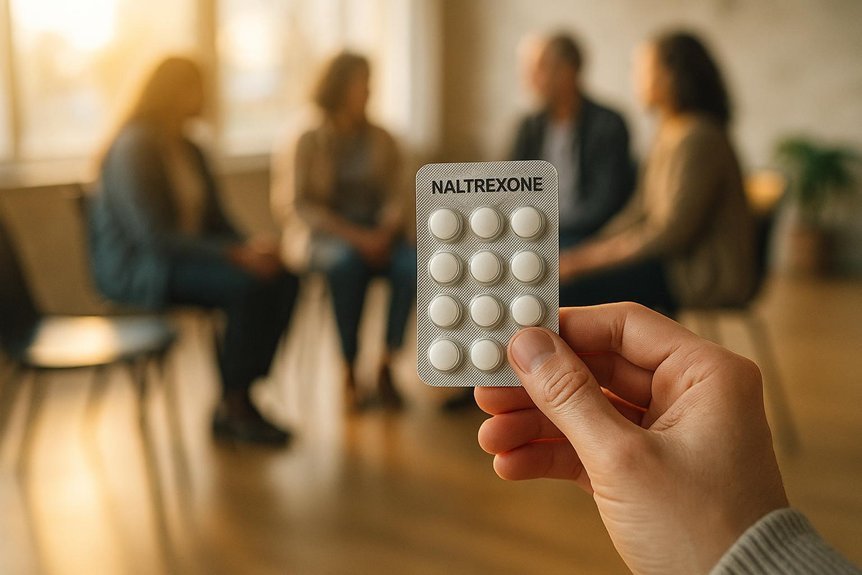
Naltrexone offers significant benefits by reducing cravings and blocking the euphoric effects of alcohol, making it easier for you to maintain abstinence. It's typically administered as an oral tablet or monthly injection.
Acamprosate works through a different mechanism by stabilizing the chemical balance in your brain. It helps reduce withdrawal symptoms like insomnia and anxiety, supporting your recovery process.
Both medications are evidence-based and can be pivotal in managing Alcohol Use Disorder effectively, providing a solid foundation for long-term recovery efforts.
How Does MAT Support Behavioral Change?
Understanding the medications used in treating Alcohol Use Disorder is a critical step, but knowing how these treatments build behavioral change is equally important.
Medication-Assisted Treatment (MAT) works by enhancing your ability to implement cognitive strategies and improve emotional regulation. By reducing cravings and withdrawal symptoms, MAT allows you to focus on developing healthier thought patterns and coping mechanisms.
This support strengthens your commitment to change and enables you to manage triggers more effectively. With MAT, you’re better equipped to break the cycle of addiction and build sustainable habits, creating a foundation for long-term recovery and improved mental health.
Evaluating MAT's Effectiveness for AUD
Evaluating the effectiveness of Medication-Assisted Treatment (MAT) for Alcohol Use Disorder (AUD) involves examining both clinical outcomes and patient experiences.
Success rates are vital; studies show that MAT markedly reduces relapse compared to placebo. Medications like naltrexone and acamprosate have demonstrated efficacy in improving abstinence rates.
Patient experiences provide insight into MAT's real-world application. Many report reduced cravings and improved quality of life, highlighting MAT's impact.
However, individual responses vary, underscoring the need for personalized approaches. It’s essential to reflect on both statistical success and personal feedback to fully assess MAT’s role in treating AUD.
Integrating MAT As a whole Into Recovery Plans
To effectively integrate Medication-Assisted Treatment (MAT) in an integrated way into recovery plans for Alcohol Use Disorder (AUD), it’s crucial to blend pharmacological interventions with psychosocial support.
Blending pharmacological interventions with psychosocial support is key to comprehensive Medication-Assisted Treatment for Alcohol Use Disorder.
You should consider thorough approaches that incorporate counseling, behavioral therapies, and peer support alongside medications like naltrexone, acamprosate, or disulfiram.
This whole-person approach enhances recovery support by addressing both physical and psychological aspects of AUD.
Engage in regular monitoring and adjustments to guarantee the treatment plan remains effective.