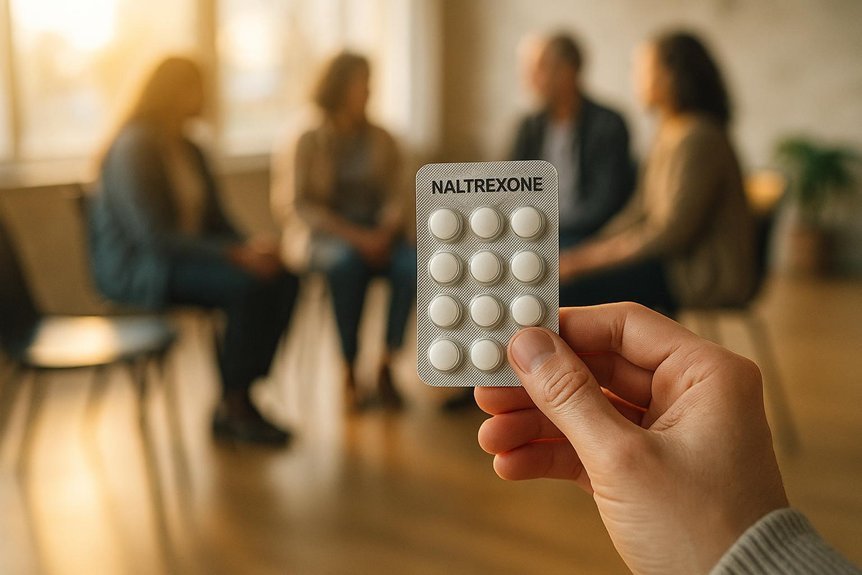
If you're exploring treatments for Alcohol Use Disorder, naltrexone is a compelling option to evaluate. This medication works by blocking opioid receptors, which reduces cravings and alters the brain's reward pathways associated with drinking. It's often used alongside behavioral therapies, creating an extensive recovery strategy. Understanding how naltrexone compares to other treatments and its role in personalized care can guide your decisions. Curious about its benefits and future potential?
What Is Alcohol Use Disorder (AUD)?
Alcohol Use Disorder (AUD) is a medical condition characterized by an impaired ability to stop or control alcohol use despite adverse social, occupational, or health consequences.
To diagnose AUD, healthcare professionals use specific diagnostic criteria, including a persistent desire to cut down alcohol use, and significant time spent obtaining, using, or recovering from alcohol.
Recognizing these criteria helps you understand the severity of AUD.
Treatment options vary and may include behavioral therapies, support groups, and medications.
Medications like naltrexone can be effective by reducing cravings and helping maintain sobriety.
It's essential to explore tailored treatment plans for effective recovery.
How Does Naltrexone Work in the Brain?
You'll find that naltrexone works by blocking opioid receptors in the brain, which reduces alcohol cravings.
This action alters the brain's reward pathways, making alcohol less appealing.
Evidence supports its effectiveness in decreasing relapse rates for those with Alcohol Use Disorder.
Opioid Receptor Blocking
While exploring the mechanism of naltrexone, understanding its role in opioid receptor blocking is vital.
Naltrexone works by binding to opioid receptors in your brain, effectively blocking them. This interaction prevents the activation of neurochemical pathways typically stimulated by alcohol consumption. By occupying these receptors, naltrexone inhibits the reinforcing effects often associated with alcohol use.
Its action disrupts the cascade of reward and pleasure signals, contributing to its effectiveness in treating alcohol use disorder. The blocking of opioid receptors not only alters neurochemical responses but also plays a significant role in managing the neurologic underpinnings of addiction.
Reduces Alcohol Cravings
Imagine naltrexone stepping into the brain's complex landscape, targeting specific pathways to reduce alcohol cravings. It binds to receptors, effectively aiding in craving management. As you integrate behavioral strategies, naltrexone complements your efforts by suppressing those urges. This dual approach enhances your control and supports recovery.
| Mechanism | Benefit | Outcome |
|---|---|---|
| Receptor Binding | Craving Reduction | Improved Self-Control |
| Craving Management | Behavioral Support | Sustained Abstinence |
| Dual Approach | Enhanced Recovery | Long-Term Success |
Alters Brain Reward Pathways
As naltrexone enters the brain, it specifically targets and alters the brain's reward pathways. By binding to opioid receptors, it blocks the effects of alcohol-induced endorphin release.
This action helps restore neurotransmitter balance, reducing the reinforcing effects of alcohol consumption. The reward circuitry, which normally reinforces drinking behavior, gets disrupted, diminishing the pleasure associated with alcohol.
You’ll find that this alteration in brain chemistry decreases the urge to drink. Evidence suggests that naltrexone’s ability to modulate these pathways plays an essential role in its effectiveness for treating alcohol use disorder, providing a scientific basis for its therapeutic use.
How Naltrexone Became Part of AUD Treatment
You’ll find that Naltrexone’s role in treating AUD started with early research identifying its potential to reduce alcohol cravings.
The FDA approved it in 1994, marking a significant advancement in treatment options.
This approval has since impacted clinical practices, providing a reliable option for supporting recovery.
Early Research and Development
While researchers explored new treatments for alcohol use disorder (AUD), naltrexone emerged as a promising option in the late 20th century.
Initially developed for opioid dependence, its potential for AUD was discovered through naltrexone history and early clinical trials. You’ll find that these studies showed naltrexone’s ability to reduce alcohol cravings by blocking opioid receptors.
Researchers conducted rigorous trials, consistently demonstrating its efficacy in decreasing relapse rates and improving treatment outcomes.
The growing body of evidence around naltrexone’s impact on AUD paved the way for its adoption in clinical practice, marking a significant advancement in addiction treatment.
FDA Approval and Impact
Building on the promising outcomes from early trials, naltrexone gained attention for its potential role in treating alcohol use disorder.
The FDA regulations guided its approval process, relying on rigorous clinical trials to guarantee safety and efficacy. Approval marked a significant shift in treatment guidelines, integrating naltrexone into standard prescribing practices.
Its market impact was substantial, enhancing patient accessibility to effective treatment options. Effectiveness studies confirmed its role in reducing cravings and relapse rates.
As a result, naltrexone became an essential component of thorough AUD management, offering a well-supported, evidence-based option for those seeking recovery.
Naltrexone vs. Other AUD Treatments
When comparing Naltrexone to other treatments for Alcohol Use Disorder (AUD), it’s vital to evaluate each option's unique mechanisms and effectiveness.
Naltrexone's effectiveness lies in its ability to block opioid receptors, reducing alcohol cravings. In treatment comparisons, Acamprosate modulates neurotransmitters, while Disulfiram creates adverse reactions to alcohol.
Cognitive Behavioral Therapy (CBT) focuses on behavior modification without medication. Studies show Naltrexone can considerably reduce relapse rates, but individual responses vary.
It’s important to take into account patient-specific factors, such as health conditions and preferences, when selecting a treatment approach. Each method offers distinct advantages, underlining the significance of personalized care.
Benefits of Using Naltrexone for AUD
Despite the challenges of treating Alcohol Use Disorder (AUD), Naltrexone offers significant benefits. By adjusting the Naltrexone dosage, you can tailor treatment duration, enhancing patient compliance and medication adherence. This approach supports long-term effects in relapse prevention.
Pairing Naltrexone with support groups and personalized therapy strengthens behavioral strategies, ensuring thorough care. Monitoring progress becomes easier, allowing for timely adjustments to maintain effectiveness.
With Naltrexone, you're not just addressing symptoms; you're building sustainable recovery through a multifaceted approach. This method helps you to take control, providing a strong framework for overcoming AUD's challenges and achieving lasting change.
Who Is Eligible for Naltrexone Treatment?
How do you know if Naltrexone is right for someone with Alcohol Use Disorder? It hinges on naltrexone eligibility criteria.
The patient selection process involves evaluating the individual's commitment to reducing alcohol intake. They shouldn’t have liver failure or opioid dependence, as these conditions contraindicate use.
It’s essential they’re not pregnant and have no contraindicated medications. A thorough medical history and physical exam help determine suitability.
Confirm they can adhere to the treatment plan and understand potential interactions. Consulting a healthcare professional guarantees a tailored approach, maximizing the chances of a successful outcome with naltrexone treatment.
Possible Side Effects of Naltrexone
While naltrexone can be effective in treating Alcohol Use Disorder, it's important to be aware of its possible side effects. You might experience nausea, headache, or dizziness initially.
Naltrexone interactions with other medications could amplify these effects, so always consult your healthcare provider. In some cases, liver function may be affected, necessitating regular monitoring.
Long term effects are generally rare but can include persistent fatigue or mood changes. Understanding these potential outcomes helps you make informed decisions.
Always report unusual symptoms to your doctor to guarantee naltrexone remains a safe and effective part of your treatment strategy.
Managing Naltrexone Side Effects
You're likely to encounter common side effects of naltrexone, such as nausea or headaches.
To manage these, consider strategies like taking the medication with food or adjusting the time of day you take it.
If side effects persist, consult your healthcare provider for tailored advice.
Common Side Effects
Although naltrexone is effective for treating alcohol use disorder, it can cause some common side effects. When adjusting your naltrexone dosage, you might experience mild to moderate symptoms.
Patient experiences often highlight these effects, which typically diminish over time.
- Nausea: This is common, especially at the beginning.
- Headache: Some report headaches, but it usually lessens with continued use.
- Fatigue: A feeling of tiredness is noted, impacting daily activities.
Understanding these side effects helps in managing expectations and improving adherence to treatment.
Always consult your healthcare provider for personalized guidance and adjustments.
Coping Strategies
Managing naltrexone side effects effectively can enhance your treatment experience and adherence. Incorporate self-care strategies and healthy habits like balanced nutrition and regular exercise.
Engage in mindfulness practices to improve emotional regulation and stress management. Support groups and peer support offer valuable coping mechanisms and relapse prevention insights.
Implement lifestyle changes that focus on reducing triggers and enhancing resilience. Prioritize stress management techniques, such as deep breathing and meditation, to maintain mental well-being.
Employ practical coping mechanisms to work through challenges confidently. These steps create a supportive framework, promoting a smoother process with naltrexone while maintaining focus on recovery goals.
Starting Naltrexone Treatment
Starting naltrexone treatment for alcohol use disorder involves a clear understanding of its purpose and benefits. You’ll begin with a naltrexone dosage typically prescribed by your healthcare provider, often starting at 50 mg per day.
Starting naltrexone for alcohol use disorder typically involves a 50 mg daily dosage prescribed by your healthcare provider.
Treatment duration varies but usually lasts several months to guarantee effectiveness.
Consider these key points:
- Consistency is essential: Take your medication daily as prescribed.
- Monitor side effects: Common ones include nausea or headaches; report any concerns to your doctor.
- Regular follow-ups: Stay in touch with your healthcare provider to adjust dosage if necessary and track progress.
This approach enhances your chances of successful recovery.
Combining Naltrexone With Therapy
Combining naltrexone with therapy greatly boosts the effectiveness of treatment for alcohol use disorder.
Therapy integration enhances medication adherence by using motivational interviewing to address ambivalence. Support systems, including family involvement, play an essential role in recovery, supporting accountability and encouragement.
Therapeutic approaches like cognitive strategies and behavioral techniques offer personalized relapse prevention plans. Group therapy provides shared experiences, reducing isolation and promoting commitment.
Success Stories: Naltrexone for AUD
While overcoming alcohol use disorder can seem challenging, success stories involving naltrexone highlight its transformative impact. Personal experiences and testimonials reveal how naltrexone has driven recovery processes and life transformations.
- Treatment milestones: Patients celebrate significant achievements with naltrexone's help.
- Inspirational outcomes: Shared victories emphasize the power of community support.
- Patient narratives: Stories showcase remarkable changes and perseverance.
These success stories underscore naltrexone's role in facilitating positive change. By emphasizing inspirational outcomes and community support, individuals find motivation and strength.
Naltrexone enables recovery by creating community support and inspiring transformative change.
The impact of shared victories not only inspires others but also proves that recovery is achievable.
Common Concerns: Safety and Efficacy of Naltrexone
When considering naltrexone for alcohol use disorder, it’s essential to address common concerns about its safety and efficacy. Some naltrexone misconceptions include fears about severe side effects or doubts about its effectiveness.
However, studies consistently show that naltrexone reduces cravings and relapse rates. Patient testimonials often highlight improved control over alcohol use and minimal side effects.
It’s vital to consult healthcare professionals to personalize treatment, ensuring it's safe for you. Remember, while naltrexone isn’t a cure, it’s a valuable tool in managing alcohol use disorder effectively.
Accurate information helps dispel myths and supports informed decision-making.
Future Research on Naltrexone for AUD
As research advances, the future of naltrexone for alcohol use disorder (AUD) holds promising potential. You’ll see innovative studies exploring:
- Future applications and combination therapies: New clinical trials aim to enhance patient outcomes through synergy with other medications.
- Personalized treatment and dosage optimization: Tailored approaches based on neurobiological studies could improve long-term effects.
- Accessibility issues and stigma reduction: Efforts focus on making treatment more available and acceptable.
These areas will drive discoveries in personalized care, addressing individual needs and breaking barriers.
Naltrexone’s evolving role could transform AUD treatment, offering hope for improved recovery and quality of life.


