
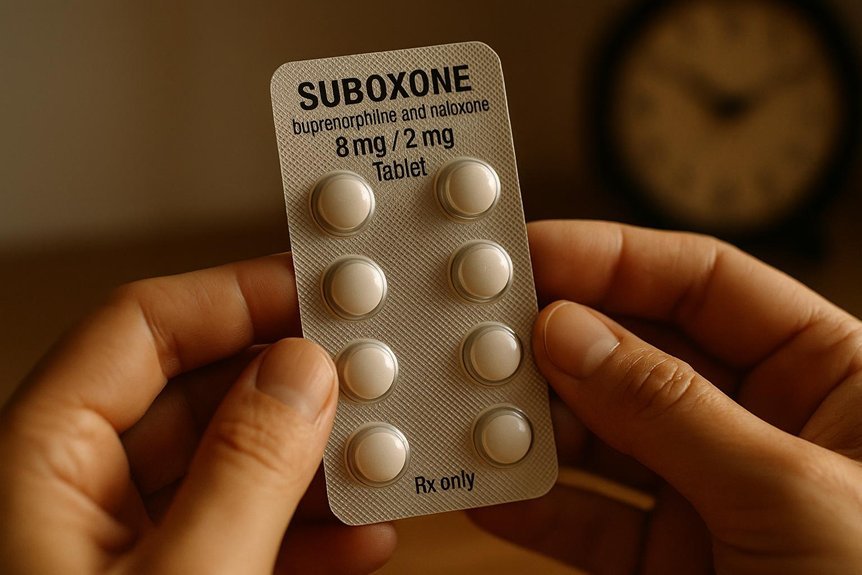
Suboxone Dosing: Finding the Right Level
Finding the right Suboxone dosing level is crucial for effective opioid dependence treatment, and it starts with your individual needs. You'll begin with a low dose, gradually adjusting based on your body's response. Factors like metabolic rates and withdrawal symptoms play a role in this process. Maintaining open communication with your healthcare provider guarantees a tailored approach, keeping treatment safe and effective. Interested in learning about how to get through these adjustments effectively?
What Is Suboxone? Understanding Its Role in Treatment
While managing opioid addiction treatment, you might encounter Suboxone, a medication that combines buprenorphine and naloxone. It reduces cravings and withdrawal symptoms—key Suboxone benefits.
Through its mechanism, buprenorphine partially activates opioid receptors, while naloxone deters misuse. Don’t let Suboxone misconceptions and stigma deter you; it’s a proven treatment.
Consider Suboxone alternatives if needed, but know its accessibility has improved. Be aware of potential Suboxone interactions with other medications.
Pregnant individuals can use it under medical guidance, offering a safer option than continued opioid use. Understanding its role enables you to make informed treatment decisions.
Initial Suboxone Dosing: How to Start Safely
To start Suboxone safely, you’ll need to carefully assess the patient’s history, including their opioid use and any co-occurring conditions.
Begin with a low dose, gradually titrating while adjusting as needed based on withdrawal symptoms and cravings.
Regularly monitor for side effects to guarantee effective and safe treatment.
Assessing Patient History
How can you guarantee safe initial dosing of Suboxone? Start with a thorough patient evaluation.
By understanding their treatment history, you’ll identify previous opioid use patterns and any past medications. This helps in evaluating tolerance levels and potential risk factors.
Consider any co-existing medical conditions or psychological factors that might influence treatment. It’s essential to know about any past withdrawal experiences, as this can guide you in determining the right starting dose.
Engage in open dialogue with the patient to secure accurate information.
Titration and Adjustment
After evaluating the patient's history, focus on the initial dosing of Suboxone by carefully considering titration and adjustment. Use appropriate titration techniques to find the ideal dose response. Proper titration guarantees effectiveness and minimizes withdrawal symptoms.
Here’s how to proceed:
- Start Low: Begin with a low dose to assess the patient's response.
- Adjust Gradually: Increase the dose incrementally, observing the patient's reaction and clinical feedback.
- Evaluate Regularly: Continuously assess the dose response to guarantee ideal therapeutic outcomes.
Monitoring for Side Effects
When starting Suboxone, monitoring for side effects is vital to confirm patient safety and effectiveness.
You'll want to watch for side effect symptoms like nausea, headache, or dizziness. These can indicate dosage issues or other underlying problems.
Use monitoring techniques such as regular check-ins with your healthcare provider and keeping a symptom diary. This proactive approach helps in adjusting the dosage promptly if needed.
It's important to report any new or worsening symptoms immediately.
Liberation Way's helpline is free, confidential, and available 24/7. A treatment specialist can help you understand your options.
Call (866) 275-3142Key Factors in Determining Suboxone Dosing
Determining the appropriate Suboxone dosing involves several key factors that guarantee both safety and effectiveness.
You need to take into account individual differences, such as:
- Tolerance Development: Assess how your body has adapted to opioid use. Higher tolerance may necessitate a different dose.
- Withdrawal Symptoms: Monitor these symptoms closely. Effective dosing should alleviate withdrawal without causing over-sedation.
- Metabolic Rate: Your body's ability to process medication impacts dosing. Faster metabolism might require adjustments for efficacy.
Adjusting Your Dose: What to Watch For
While adjusting your Suboxone dose, it’s crucial to watch for specific indicators that signal whether the dose is effective or needs modification.
Monitor your body's response closely. If you experience withdrawal symptoms, it might indicate that the dose or dose frequency needs adjustment. Insufficient dosing can lead to cravings and discomfort, while too much may cause sedation or other side effects.
Monitor your body’s response; withdrawal symptoms may signal a need to adjust your Suboxone dose or frequency.
Keep track of how you feel throughout the day, noting any changes in mood or physical symptoms.
Regularly consult with your healthcare provider to guarantee your treatment is appropriately tailored to your needs, promoting ideal recovery outcomes.
Keeping Treatment Safe and Effective
To keep your Suboxone treatment both safe and effective, it’s essential to adhere to prescribed guidelines and remain vigilant about your body's responses. Here’s how you can guarantee success:
- Treatment Adherence: Follow your dosing schedule meticulously. Missing doses can disrupt your progress and increase relapse risk.
- Patient Education: Stay informed about potential side effects and interactions. Knowledge supports you to recognize issues early.
- Monitor Changes: Keep track of any physical or emotional changes. Report these to your healthcare provider to adjust your treatment if necessary.
Partnering With Your Healthcare Provider
Regularly discuss your progress, any side effects, and dosage adjustments. Open dialogue helps tailor your treatment plan to your unique needs, improving outcomes and minimizing risks.
Be proactive in sharing concerns and asking questions. Your provider’s expertise, combined with your input, creates a collaborative environment for effective management.