Narcan (Naloxone) for Opioid Overdose Reversal
You're likely aware of the opioid crisis and its devastating impact. Narcan, or Naloxone, is a pivotal tool in reversing opioid overdoses, acting quickly to restore normal breathing. Recognizing overdose signs—such as slow breathing and unresponsiveness—is essential for timely intervention. With increasing community programs and policy support, Narcan access is expanding, offering hope. But how does this life-saving medication work, and what are the future innovations in opioid overdose prevention?
What Is Narcan and How Does It Work?
Narcan, a life-saving medication, is vital in reversing opioid overdoses. It acts quickly to block opioid effects, restoring normal breathing.
Through Narcan education, you can engage in community outreach, focusing on overdose prevention and harm reduction. Legislative advocacy increases public awareness and makes Narcan more accessible.
Engage in community outreach and advocacy to boost Narcan accessibility and prevent overdoses effectively.
Training workshops equip communities to tackle health disparities and strengthen support networks. By understanding Narcan, you enhance emergency response capabilities.
It's essential to promote these efforts, ensuring that everyone knows how to use Narcan effectively. Your involvement can make a difference, saving lives and developing safer, more informed communities.
Recognizing the Signs of an Opioid Overdose
Understanding how Narcan works is just one part of addressing opioid overdoses; recognizing the signs of an overdose is equally important. You need to identify symptoms like slow or stopped breathing, pinpoint pupils, and unconsciousness.
Overdose misconceptions can lead to dangerous delays in response, so community awareness is essential. People often mistake these signs for simple intoxication, but timely action can save lives. If you notice these symptoms, call emergency services immediately and prepare to administer Narcan if available.
Liberation Way's helpline is free, confidential, and available 24/7. A treatment specialist can help you understand your options.
Call (866) 275-3142The Science Behind Opioid Overdose Reversal
To understand how Narcan reverses an opioid overdose, you need to know its mechanism of action.
Narcan works by rapidly binding to opioid receptors in the brain, blocking the effects of opioids and restoring normal respiration.
This opioid receptor blockade is essential in counteracting life-threatening symptoms.
Mechanism of Action
When opioids flood the brain, they latch onto specific receptors, leading to dangerous effects like respiratory depression. Opioids have a high affinity for these receptors, causing significant receptor interaction that disrupts normal breathing.
Narcan (naloxone) works by competing with opioids for these binding sites. Its stronger opioid affinity allows it to effectively displace the opioids, mitigating their harmful effects. By reversing the receptor interaction, Narcan quickly restores normal respiratory function.
This mechanism is critical in emergency situations, providing a life-saving intervention. Understanding this process highlights Narcan’s pivotal role in opioid overdose management, ensuring rapid and effective response.
Opioid Receptor Blockade
Though opioids bind tightly to their receptors, Narcan's unique ability to block these sites plays a significant role in opioid overdose reversal. By competing with opioids at receptor sites, naloxone disrupts the opioid receptor interaction, rapidly restoring normal respiratory function. Its effectiveness, or naloxone efficacy, is well-documented in reversing life-threatening symptoms.
| Concept | Description |
|---|---|
| Opioid Binding | Strong affinity for receptors |
| Narcan Action | Competitive binding |
| Receptor Interaction | Blocking opioid effects |
| Respiratory Restoration | Immediate improvement |
| Clinical Efficacy | Proven success in emergencies |
Understanding this blockade mechanism is essential for emergency response.
Narcan’s Role in Combating the Opioid Crisis
As the opioid crisis continues to devastate communities, Narcan emerges as a critical tool in reversing overdoses and saving lives.
You play an essential role in this fight by promoting community education about Narcan's effectiveness and accessibility. Educating others helps reduce the stigma surrounding opioid use, encouraging more people to carry and use Narcan without hesitation.
How to Administer Narcan Safely
To administer Narcan safely, you first need to recognize overdose symptoms like slowed breathing and unresponsiveness.
Follow step-by-step instructions for either nasal spray or injection, ensuring you're calm and precise.
After administering, provide post-care by staying with the person until emergency services arrive.
Recognizing Overdose Symptoms
Recognizing the symptoms of an opioid overdose is essential for timely intervention. You need to be aware of signs like shallow breathing, pinpoint pupils, and unresponsiveness.
Overdose awareness can save lives, and educating yourself and your community is vital. If someone seems unconscious or their breathing is irregular, act quickly.
Check for bluish skin, especially around the lips or fingertips, which indicates severe oxygen deprivation. Encourage community education to increase preparedness, as knowing these symptoms enhances response effectiveness.
Step-by-Step Instructions
When faced with an opioid overdose, administering Narcan swiftly and correctly is essential.
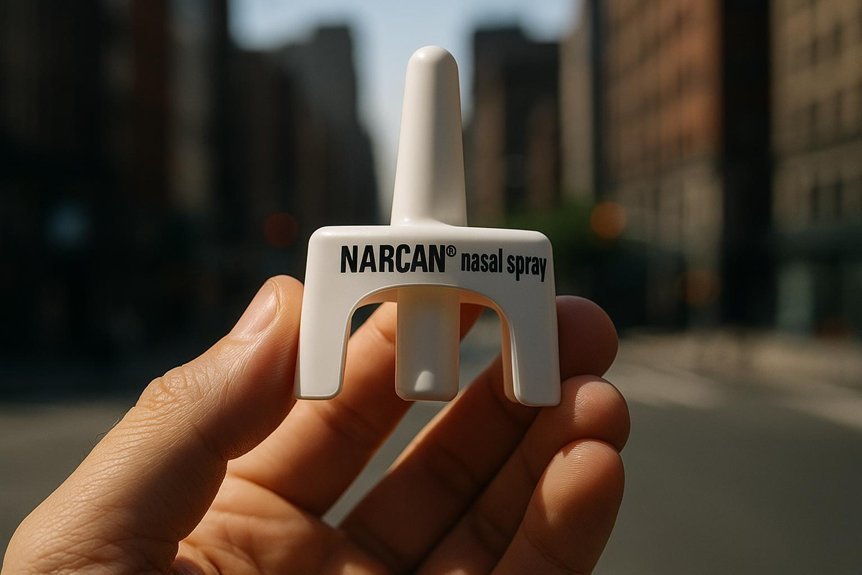
First, confirm the person is on their back. Remove the Narcan nasal spray from its packaging. Hold the device with your thumb on the plunger and two fingers on the nozzle. Insert the tip into one nostril until your fingers touch the nose. Press the plunger firmly to release the dose.
Community training programs enhance public awareness, equipping individuals with these critical skills.
After administering, stay with the person until help arrives, as further assistance may be needed. Your role can be life-saving in these moments.
Post-Administration Care
Even after administering Narcan, it’s vital to monitor the person closely and secure their safety. Confirm they’re breathing and responsive. If they relapse into an overdose, administer another dose. Keep them on their side to prevent choking. Stay with them until emergency services arrive. Post-incident support is significant. Connect them with follow-up resources to aid recovery and address underlying issues. Here’s a quick guide:
| Step | Action | Purpose |
|---|---|---|
| Monitor | Check breathing and responsiveness | Maintain ongoing safety |
| Administer again | If needed | Prevent relapse |
| Position | Place on side | Prevent choking |
| Support | Connect with resources | Aid recovery |
Training Programs for Narcan Use
While the prevalence of opioid overdoses continues to rise, training programs for Narcan use have become vital in equipping individuals with life-saving skills.
You’ll find that training sessions often cover recognizing overdose signs, administering Narcan, and ensuring safety. Community workshops offer hands-on practice, enabling you to act confidently in emergencies.
Evidence shows that these programs greatly increase survival rates. By participating, you’re not just gaining knowledge; you’re becoming an essential part of the response network.
Prioritize attending these sessions to enhance your readiness and contribute positively to your community's health and safety.
Accessing Narcan Locally
Equipped with the skills from training programs, you’re ready to acquire Narcan and make a tangible impact in your community.
Local distribution is key, so start by checking with nearby pharmacies and health departments, which often provide Narcan through community programs. These initiatives aim to improve accessibility and reduce opioid overdose deaths.
You can also connect with local harm reduction organizations that distribute Narcan kits and offer additional resources.
By participating in these programs, you enhance community safety and support those at risk.
Stay informed about local efforts and guarantee you’re part of the solution to this critical issue.
Prescription vs. Over-the-Counter Narcan
When considering Narcan, you’ll find that over-the-counter options greatly increase accessibility, making it easier for more people to obtain this life-saving medication without a prescription.
However, while over-the-counter availability enhances access, it may also lead to increased costs that aren't always covered by insurance.
Understanding these differences is essential for ensuring effective distribution and affordability.
Accessibility and Availability
As the opioid crisis intensifies, ensuring Narcan's accessibility becomes essential. You need to understand how prescription and over-the-counter options impact availability.
Community outreach and educational programs strengthen access by promoting awareness and preparedness.
Here's how you can enhance accessibility:
- Over-the-Counter Availability: Increases immediate access, reducing barriers.
- Community Outreach Initiatives: Distribute Narcan in high-risk areas, supporting local communities.
- Educational Programs: Educate the public and healthcare providers about Narcan use and benefits.
- Pharmacy Partnerships: Encourage pharmacies to stock Narcan widely, facilitating easier purchase without a prescription.
These strategies can greatly improve Narcan availability.
Cost and Insurance Coverage
Increasing accessibility is just one piece of the puzzle in combating the opioid crisis. You’ll find that cost barriers can greatly impact Narcan’s availability.
With recent shifts towards over-the-counter options, prices may vary widely, affecting affordability. Insurance options play a vital role; some plans cover Narcan, but coverage isn’t universal. Confirm you check your plan’s specifics to understand potential out-of-pocket expenses.
Prescription versions might be cheaper with insurance, but over-the-counter access removes prescription hurdles. Balancing these factors is fundamental to maximizing Narcan’s reach and effectiveness in emergency situations, providing life-saving intervention when every second counts.
Narcan’s Public Health Impact
Despite ongoing challenges, Narcan has greatly impacted public health by effectively reducing opioid overdose deaths. You can see its influence through increased community outreach and public education efforts.
Here’s how Narcan makes a difference:
- Saves Lives: Narcan reverses overdoses, preventing fatalities.
- Enables Communities: Through training programs, it boosts local response capabilities.
- Enhances Awareness: Public education initiatives spread essential information about opioid risks and treatment.
- Supports Policy Change: Evidence of its effectiveness encourages supportive legislation.
Debunking Narcan Myths
Narcan's proven public health benefits are clear, yet misconceptions persist about its use and effects. One common myth is that Narcan encourages opioid misuse. Evidence shows it doesn’t increase drug use; rather, it’s a life-saving tool in emergencies.
Another misconception is that Narcan is ineffective or dangerous. In reality, it’s highly effective in reversing opioid overdoses with minimal side effects.
Some believe Narcan’s availability is unnecessary, but widespread access is vital for timely intervention. By understanding these myths and focusing on Narcan's effectiveness, you can better appreciate its essential role in combating the opioid crisis.
Understanding Narcan Laws
You need to understand that Narcan laws vary considerably by state, affecting its accessibility and how it's distributed.
In many regions, you can obtain Narcan without a prescription, but others may still require one.
Knowing these legal nuances is essential for ensuring timely access in emergencies.
Legal Accessibility Variations
Understanding the variations in Narcan laws across different regions is essential for ensuring its accessibility and effectiveness in combating opioid overdoses.
Legal disparities can impact how quickly and easily Narcan reaches those in need. To work through these differences, consider the following:
- State Legislation: Laws vary widely; some states offer broad access while others impose restrictions.
- Good Samaritan Laws: These laws protect those administering Narcan from legal repercussions.
- Community Programs: Local initiatives can increase Narcan distribution and education.
- Pharmacy Access: Some areas allow over-the-counter sales, enhancing accessibility.
Knowing these factors helps you advocate for better access and support.
Prescription Requirements Overview
While handling through the complexities of Narcan prescription requirements, it’s crucial to recognize the diverse regulations that govern its distribution.
Prescription guidelines vary considerably across states, reflecting local regulation changes aimed at improving access. Many states allow pharmacists to dispense Narcan without a traditional prescription under standing orders.
Others have made it available over-the-counter, eliminating barriers further. These shifts respond to the opioid crisis, aiming to enhance public safety and reduce overdose deaths.
Staying informed about local regulations guarantees you can access Narcan when needed. Understanding these evolving guidelines supports you to manage the system effectively and save lives.
Narcan Success Stories and Statistics
Although the opioid crisis continues to challenge communities, Narcan has emerged as a powerful tool in reversing overdoses and saving lives. You’ll find countless success stories of individuals brought back from the brink.
Narcan is a lifesaver, reversing overdoses and restoring hope amid the opioid crisis.
The statistical impact is significant:
- Over 26,000 overdoses were reversed by laypersons using Narcan from 1996 to 2014.
- Every 3 minutes, Narcan is administered to someone in the U.S.
- 93% of opioid overdoses treated with Narcan result in survival.
- Community programs report a 50% reduction in overdose deaths with Narcan distribution.
These numbers underscore Narcan’s life-saving potential in combating opioid overdoses.
Expanding Narcan Access Through Policy
As the opioid crisis persists, expanding access to Narcan through targeted policy changes becomes essential.
You need policy initiatives that focus on community outreach and training workshops to boost public awareness and harm reduction. Legislative advocacy can drive accessibility measures, ensuring Narcan is readily available.
Funding support is vital for these efforts, while insurance policies must cover Narcan without barriers. Pharmacy regulations should allow easier distribution, making it accessible over-the-counter.
Recent Innovations in Opioid Overdose Prevention
Emerging technologies and novel approaches are revolutionizing opioid overdose prevention. You can now connect with life-saving innovations that focus on community outreach and educational programs. These strategies are essential for addressing the opioid crisis effectively.
Here’s how:
- Digital Platforms: Utilize apps for real-time overdose alerts and prevention tips.
- Virtual Training: Access interactive online educational programs to learn how to use Narcan.
- Community Outreach Initiatives: Participate in local events that distribute Narcan and offer addiction resources.
- Data Analytics: Draw on data to identify high-risk areas and tailor prevention efforts.
Stay informed and engaged to make a difference.
Integrating Narcan Into Addiction Treatment
By incorporating Narcan, you’re actively supporting treatment integration and policy advocacy, ensuring it’s accessible and effective. This strategy helps reduce stigma, encouraging more people to seek help.
Incorporating Narcan actively supports treatment integration, making it accessible and reducing stigma to encourage help-seeking.
Building comprehensive support networks and expanding recovery resources are vital. When you focus on these areas, you’re not just saving lives during overdoses but also supporting long-term recovery.
This whole-person approach helps individuals, strengthens communities, and provides an all-encompassing solution to the opioid epidemic.
Future Directions for Narcan and Opioid Solutions
Looking ahead, the future of Narcan and opioid solutions hinges on innovation and accessibility. You’ll find that progress relies on several key areas:
- Future Research: Prioritize studies focusing on long-term efficacy and novel delivery methods.
- Policy Implications: Advocate for laws that increase Narcan availability and support harm reduction strategies.
- Community Outreach: Strengthen programs that raise awareness and provide Narcan training.
- Technological Advancements: Invest in digital tools for real-time overdose tracking and response.