Naltrexone for Alcohol Use Disorder
If you're exploring treatments for Alcohol Use Disorder, naltrexone might be on your radar. It's a key player in reducing alcohol cravings by blocking the brain's reward pathways, making it easier to focus on recovery. But who benefits most from this medication, and how does it stack up against other treatments? Understanding its role could be pivotal in your experience toward sobriety. Let's uncover the specifics together.
Understanding Alcohol Use Disorder and Treatment Options
Although alcohol use disorder (AUD) affects millions worldwide, understanding its complexity is key to effective treatment. You need to recognize risk factors and initiate early intervention to enhance recovery prospects.
Social support and lifestyle changes play essential roles in promoting long-term recovery. Addressing psychological aspects through therapy can aid in relapse prevention and develop effective coping strategies.
Family involvement and community resources are crucial in providing a strong support network. Take on thorough treatment plans that integrate these elements, building resilience and reducing the likelihood of relapse.
How Does Naltrexone Help With AUD?
You’ll find that naltrexone helps with alcohol use disorder by effectively reducing cravings.
It works by blocking the brain’s reward pathways, diminishing the pleasurable effects of alcohol.
This mechanism supports you in managing your alcohol consumption more successfully.
Reducing Cravings Effectively
When dealing with alcohol use disorder (AUD), naltrexone plays an essential role in reducing cravings effectively.
It targets craving triggers by modulating the brain's response to alcohol, making you less likely to reach for a drink. This medication supports your coping strategies by decreasing the urge to consume alcohol, which is vital for maintaining sobriety.
By reducing the frequency and intensity of cravings, naltrexone helps you to focus on recovery without the constant battle against desire.
It's a powerful tool in your treatment plan, allowing you to get through daily life with more confidence and control over your AUD.
Blocking Reward Pathways
Naltrexone not only reduces cravings but also plays a significant role by blocking the brain's reward pathways associated with alcohol consumption.
When you drink alcohol, it triggers a release of dopamine, creating a sense of pleasure. Naltrexone intervenes by modulating this dopamine regulation, preventing the neurotransmitter imbalance that reinforces addictive behavior.
Liberation Way's helpline is free, confidential, and available 24/7. A treatment specialist can help you understand your options.
Call (866) 275-3142Who Benefits Most From Naltrexone in AUD?
Curiously, who stands to gain the most from naltrexone when tackling alcohol use disorder (AUD)? Those with specific patient profiles benefit greatly. Personalized treatment reveals that individuals who drink heavily but can maintain some control respond well. Genetic factors and family history also play critical roles. Understanding these profiles can optimize outcomes.
| Patient Profile | Key Factor | Benefit Likelihood |
|---|---|---|
| Heavy Drinkers | Control Retention | High |
| Genetic Predisposition | Family History | Moderate |
| Early Intervention | Initial AUD Stages | High |
| Comorbid Disorders | Dual Diagnosis | Moderate |
| Motivated Individuals | Strong Commitment | High |
Tailoring treatment maximizes naltrexone's effectiveness.
Benefits of Using Naltrexone for Sobriety
For those seeking sobriety, using naltrexone offers significant benefits. This medication reduces cravings and can help you manage alcohol use effectively.
Clinical studies show it lowers relapse rates, supporting your commitment to long-term sobriety. Personal experiences often highlight a decrease in the urge to drink, making daily life more manageable.
Naltrexone's impact isn't just short-lived; its long-term effects contribute to sustained recovery by altering brain responses to alcohol. By blocking the pleasurable effects of alcohol, it helps break the cycle of addiction.
Taking on naltrexone can be a pivotal step towards achieving and maintaining lasting sobriety.
Incorporating Naltrexone Into Your Recovery Plan
To effectively incorporate naltrexone into your recovery plan, understand its benefits in reducing alcohol cravings and supporting sustained sobriety.
Follow dosage and administration guidelines closely to maximize its efficacy, and integrate it with therapy and support groups for a thorough approach.
This combination enhances your chances of achieving long-term recovery.
Benefits of Naltrexone Use
When considering incorporating Naltrexone into your recovery plan, it’s essential to understand its benefits. Naltrexone effectiveness in reducing alcohol cravings is well-documented, aiding in maintaining sobriety. By blocking opioid receptors, it diminishes the rewarding effects of alcohol, making relapse less appealing. Patient adherence is vital, as consistent use enhances outcomes. Studies show improved treatment retention and reduced relapse rates.
Here's a quick overview:
| Benefit | Description |
|---|---|
| Craving Reduction | Lessens desire to drink |
| Relapse Prevention | Decreases likelihood of relapse |
| Improved Retention | Encourages ongoing treatment |
| Enhanced Sobriety | Supports long-term alcohol abstinence |
Incorporating Naltrexone can greatly bolster your path to recovery.
Dosage and Administration Guidelines
Although starting Naltrexone can feel like a big step, understanding the correct dosage and administration is crucial for success.
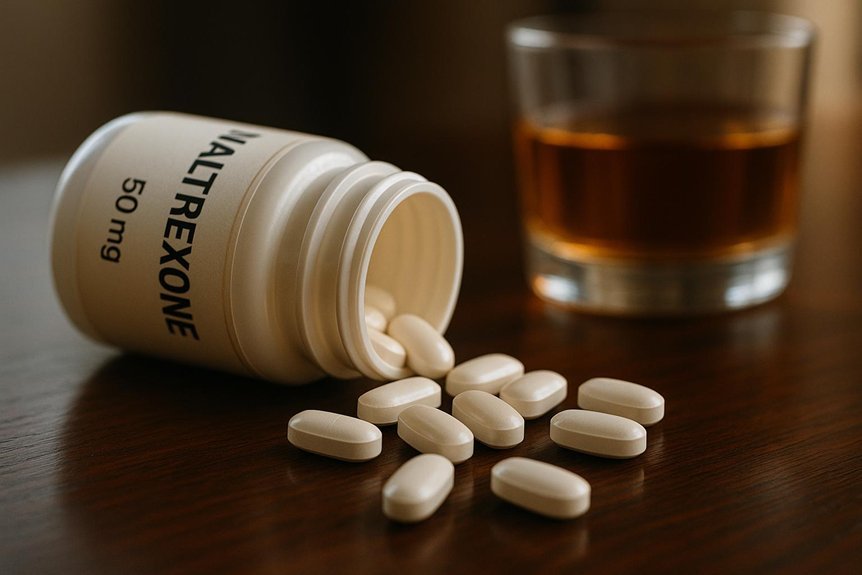
Typically, the dosage recommendations are 50 mg orally once daily. It's important to follow your healthcare provider's instructions closely.
Naltrexone is available in two administration routes: oral tablets and monthly intramuscular injections. Tablets offer daily convenience, while injections guarantee consistent medication levels.
Before beginning, confirm you're opioid-free for 7–10 days to prevent withdrawal. Discuss any concerns with your provider, as adjusting dosages might be necessary based on your needs.
Combining Therapy and Support
Integrating Naltrexone into your recovery plan can greatly enhance your path forward to sobriety, especially when combined with therapy and support. You’ll find that therapy options, support groups, and peer support are essential. Community resources can provide comprehensive approaches, offering personalized plans and coping strategies. Involving family can strengthen your support network, ensuring a thorough recovery path.
| Therapy Options | Support Groups | Community Resources |
|---|---|---|
| Cognitive-Behavioral | AA Meetings | Local Clinics |
| Motivational | SMART Recovery | Online Platforms |
| Family Involvement | Peer Support | Workshops |
| Whole-person Approaches | 12-Step Groups | Counseling Services |
Use these strategies to bolster your success.
Managing Naltrexone's Side Effects for Better Outcomes
While taking naltrexone for alcohol use disorder, managing its side effects is essential for better outcomes.
Focus on side effect management through lifestyle adjustments and patient education. Prioritize medication adherence by understanding potential side effects and using coping strategies. Incorporate dietary considerations to minimize discomfort.
Regularly monitor progress and engage with support systems for emotional support and mental health stability. Implement effective strategies to address any challenges, ensuring you stay on track.
By encouraging a proactive approach, you enhance your ability to manage side effects, leading to improved treatment outcomes and sustained recovery.
Naltrexone vs. Other Treatments
When considering treatments for alcohol use disorder, it's crucial to compare naltrexone with other options like acamprosate, disulfiram, and behavioral therapies.
Naltrexone's efficacy in reducing cravings and preventing relapse often matches or exceeds alternatives. However, treatment comparisons show that medication adherence varies, impacting patient experiences and long-term outcomes.
While naltrexone offers effective relapse prevention, acamprosate suits those focusing on abstinence, and disulfiram requires strict supervision.
Behavioral therapies complement these medications, enhancing therapeutic strategies. Your choice ultimately hinges on individualized care, aligning treatment with your lifestyle and goals for the best results.