MAT for Veterans With Opioid Use Disorder
You're about to explore how Medication-Assisted Treatment (MAT) transforms lives for veterans battling Opioid Use Disorder (OUD). This approach combines medications with therapy to tackle addiction's physical and psychological challenges. It's more than just treatment; it's a pathway to resilience and better quality of life. Wondering about how these elements work together to make a difference in veterans' lives? There's much more to uncover.
Why Veterans Face Unique Challenges With OUD
While veterans have shown remarkable resilience, they often face unique challenges in dealing with opioid use disorder (OUD).
Trauma impact from service can lead to mental health issues, compounded by stigma challenges and cultural barriers that hinder seeking help.
Trauma from service often results in mental health issues, with stigma and cultural barriers preventing veterans from seeking help.
Service changes exacerbate social isolation, making it harder to connect with community support.
Economic stressors add to the burden, impacting treatment accessibility.
Veterans manage complex policy implications that can limit resources.
Understanding these hurdles is essential to improving care and support systems.
What Is Medication-Assisted Treatment (MAT)?
Medication-Assisted Treatment (MAT) offers a detailed approach to tackling opioid use disorder (OUD), combining medication with counseling and behavioral therapies.
It’s essential for you to understand how MAT works, providing effective treatment options that address both the physical and psychological aspects of OUD.
Here’s how MAT supports recovery:
- Medication: It reduces withdrawal symptoms and cravings, making it easier to focus on recovery.
- Opioid Education: You’ll gain a deeper understanding of addiction, helping you make informed choices.
- Therapy: Counseling offers emotional support and coping strategies, vital for long-term success.
MAT’s extensive approach guarantees you’re well-equipped to overcome OUD.
Liberation Way's helpline is free, confidential, and available 24/7. A treatment specialist can help you understand your options.
Call (866) 275-3142How MAT Makes a Difference for Veterans
You’ll find that MAT considerably boosts recovery outcomes for veterans by combining medication with therapy to reduce withdrawal symptoms and cravings.
It’s not just about overcoming addiction; it’s about enhancing your overall quality of life.
With MAT, veterans can regain stability, improving both mental and physical well-being.
Improved Recovery Outcomes
For veterans facing the challenges of addiction recovery, Medication-Assisted Treatment (MAT) offers a notable advantage. By integrating medication with behavioral therapies, MAT enhances recovery outcomes through:
- Community Support: You’ll find strength in shared experiences and encouragement from peers, creating a network that builds healing.
- Personalized Treatment: MAT is tailored to your unique needs, addressing specific challenges you face in recovery, making it more effective.
- Reduced Relapse Rates: With consistent medication and therapy, MAT considerably lowers the likelihood of relapse, supporting long-term sobriety.
Engaging in MAT can transform your path to recovery, providing tools and support for a healthier future.
Enhanced Quality of Life
Although recovery from addiction poses numerous challenges, engaging in Medication-Assisted Treatment (MAT) can greatly boost a veteran's quality of life.
By integrating comprehensive approaches, MAT addresses not just the physical aspects of opioid use disorder but also mental and emotional well-being. these methods promote stability, allowing you to rebuild your life with renewed focus and strength.
Additionally, using community resources can provide essential support networks. These connections support a sense of belonging, offering encouragement and understanding when it's needed most.
With MAT, you're not just surviving; you're thriving and reclaiming a fulfilling, purposeful life.
Medications Used in MAT for OUD
When exploring medications used in MAT for OUD, you'll encounter commonly prescribed options like methadone, buprenorphine, and naltrexone.
Each of these medications offers specific benefits, helping manage withdrawal symptoms and reduce cravings.
It's important to understand potential side effects and how healthcare providers address them to guarantee safe and effective treatment.
Commonly Prescribed MAT Medications
Medication-Assisted Treatment (MAT) plays an essential role in helping veterans overcome opioid use disorder (OUD).
By providing effective opioid alternatives, MAT enhances treatment accessibility and supports recovery.
Here are three commonly prescribed MAT medications:
- Methadone: A long-acting opioid agonist, it reduces withdrawal symptoms and cravings, helping manage OUD effectively.
- Buprenorphine: This partial opioid agonist works by easing withdrawal symptoms while lowering addiction risk, making it a safer choice.
- Naltrexone: An opioid antagonist, it blocks opioid effects, preventing misuse and relapse.
These medications offer veterans vital support on their path to recovery.
Benefits of MAT Options
Choosing the right MAT option offers significant benefits for veterans battling opioid use disorder. MAT can stabilize your life, reducing the risk of relapse and overdose.
By using medications like buprenorphine or methadone, you’ll find it easier to manage withdrawal symptoms and cravings. This stability allows you to engage more fully in community support and peer mentorship programs, which are essential for recovery.
These connections build a sense of belonging and understanding, creating a supportive environment where you can share experiences and advice.
Ultimately, MAT helps you reclaim control, paving the way for a healthier, more fulfilling life.
Addressing Side Effects
While the benefits of MAT for veterans are clear, it's important to address potential side effects of the medications used in this treatment.
Effective side effects management guarantees medication adherence, vital for success. Here are three key considerations:
- Understand Common Side Effects: Educate yourself about potential issues like nausea, drowsiness, or constipation, which can affect daily life.
- Communicate with Healthcare Providers: Regularly discuss any side effects with your doctor to adjust treatment plans as needed.
- Adopt Healthy Habits: Incorporate diet and exercise to mitigate side effects and improve overall well-being.
Managing Medication Side Effects
| Side Effect | Emotional Impact |
|---|---|
| Nausea | Frustration and Fatigue |
| Dizziness | Anxiety and Uncertainty |
| Insomnia | Irritability and Stress |
| Constipation | Discomfort and Worry |
Understanding these impacts helps you communicate effectively with healthcare providers, ensuring adjustments are made to support your well-being.
The Role of Counseling in MAT
Managing medication side effects is just one part of the path. Counseling plays an essential role in Medication-Assisted Treatment (MAT) for veterans. Various counseling techniques help you manage opioid use disorder effectively.
- Therapeutic Approaches: Engage in individual therapy and group sessions. Utilize cognitive behavioral and trauma-informed care to develop coping strategies and prevent relapse.
- Motivational Interviewing: This technique boosts your motivation and commitment to change, encouraging positive behavior.
- Support Networks: Family involvement and whole-person methods strengthen your support system, promoting recovery through an all-encompassing approach.
Counseling guarantees you’re not alone, building resilience and long-term success.
Behavioral Therapies That Complement MAT
Incorporating behavioral therapies into Medication-Assisted Treatment (MAT) for veterans can greatly enhance recovery outcomes.
You’ll find that integrative approaches, combining both medication and therapeutic modalities, provide a more thorough path to overcoming opioid use disorder.
Cognitive-behavioral therapy (CBT) helps you identify and change negative thought patterns, while motivational interviewing boosts your readiness to change.
These therapies work alongside MAT to address underlying psychological issues and enhance coping skills.
By using these integrative approaches, you’re not just treating symptoms but also encouraging long-term resilience and recovery.
The combination guarantees a comprehensive approach, addressing both physical and emotional aspects of recovery.
Overcoming Barriers to MAT Success for Veterans
To enhance MAT success for veterans, you need to focus on improving access to quality care and addressing stigma and bias.
Ensuring that veterans can easily reach effective treatment options is essential.
Access to Quality Care
While veterans often face unique challenges, accessing quality care for Medication-Assisted Treatment (MAT) shouldn’t be one of them.
Here’s how you can find better access:
- Telehealth access: Use telehealth services for convenient, remote consultations. It’s a game-changer in reaching providers without the hassle of travel.
- Community outreach: Engage in local community programs aimed at supporting veterans. These initiatives often provide valuable resources and guidance.
- Veterans Affairs (VA) support: Draw on VA services tailored to your needs. They’re designed to guarantee you receive extensive care.
Reducing Stigma and Bias
Accessing quality care for Medication-Assisted Treatment (MAT) is essential, but it's equally important to address the stigma and bias that can hinder success for veterans. You play a vital role in stigma reduction by promoting bias awareness. Understanding and empathy can transform perceptions, making MAT more accessible.
| Challenge | Impact on Veterans | Solution |
|---|---|---|
| Stigma | Isolation | Education |
| Bias | Unequal treatment | Training |
| Misunderstanding | Reluctance to seek help | Open Dialogue |
| Stereotypes | Reduced self-esteem | Peer Support |
Success Stories: Veterans Overcoming OUD With MAT
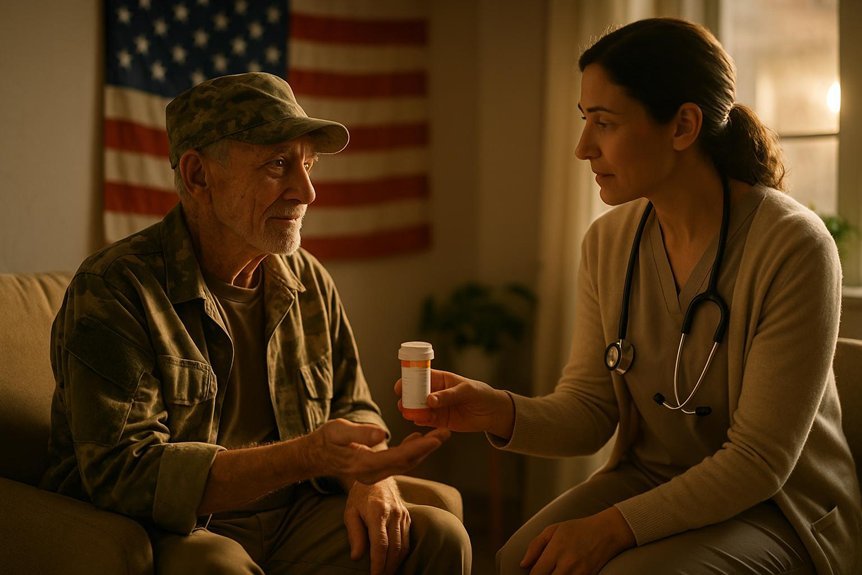
For many veterans battling opioid use disorder (OUD), medication-assisted treatment (MAT) has become a lifeline that transforms lives. You’ll find inspiring success stories where veteran resilience and community support play essential roles. Here’s how:
- Veteran Resilience: With MAT, veterans like you harness inner strength, overcoming challenges and building a brighter future.
- Community Support: Engaging in supportive networks encourages recovery, offering encouragement and shared experiences.
- Consistent Progress: Veterans often see steady improvements in health and stability, regaining control over their lives.
These elements combine to create powerful narratives of recovery and hope, demonstrating the transformative impact of MAT.
How to Access MAT Services and Veteran Support
Are you wondering how veterans can access medication-assisted treatment (MAT) services and support? Start by reaching out to veteran outreach programs, which are designed to connect you with the necessary resources.
The Department of Veterans Affairs (VA) offers extensive services, ensuring treatment accessibility for those in need. You can contact your local VA facility or visit their website to explore options tailored to veterans with opioid use disorder.
Additionally, community organizations often collaborate with the VA, providing further support. Don’t hesitate to seek guidance from these resources—they’re there to help you get through the path to recovery efficiently.
Support Systems in Recovery
While traversing recovery, support systems play an essential role in your recovery. Engaging with veteran networks and mentorship programs can boost your emotional resilience. Here’s how to strengthen your recovery:
- Peer Support & Group Therapy: Connect with others who understand your challenges. Peer support and group therapy offer shared experiences and encouragement.
- Family Involvement & Community Engagement: Encourage relationships with family and participate in community activities. These bonds provide stability and motivation.
- Comprehensive Approaches & Continuous Education: Explore whole-person methods and keep learning. This enhances your recovery by promoting overall well-being through social activities and educational opportunities.
Future Directions for MAT in Veteran Care
As the landscape of care evolves, Medication-Assisted Treatment (MAT) for veterans is poised for significant advancements.
You'll witness a future where telehealth integration enhances accessibility, allowing veterans to connect with healthcare providers from anywhere. This convenience guarantees timely support and continuous monitoring, essential for effective recovery.
Additionally, community partnerships play a pivotal role. By collaborating with local organizations and service providers, you can create a comprehensive support network tailored to veterans' needs.
These partnerships facilitate resource sharing, guaranteeing all-encompassing care. Adopt these innovations to provide veterans with the comprehensive, effective treatment they deserve in overcoming opioid use disorder.