Medicaid Coverage for IOP
You might be surprised to learn how Medicaid can support mental health through Intensive Outpatient Programs (IOP). These programs offer structured therapy, balancing intensive care with daily life. Medicaid's coverage extends beyond therapy to include medication management and crisis intervention. However, eligibility and application processes can be tricky. Understanding state-specific variations and knowing how to work through these services is essential. Could Medicaid be the key to accessing thorough mental health care?
Understanding Medicaid Coverage for IOP
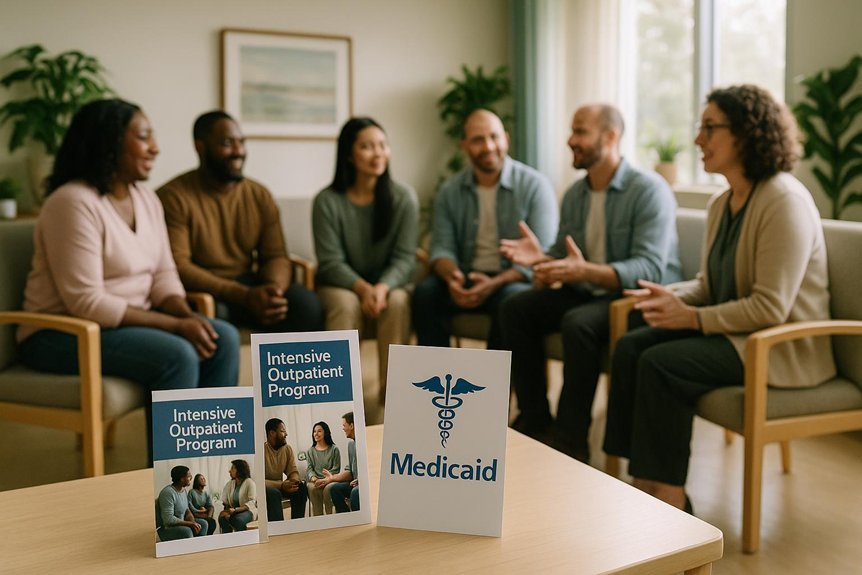
How does Medicaid cover Intensive Outpatient Programs (IOP)? Medicaid often covers IOP as part of its mental health services, reflecting current mental health trends emphasizing community-based treatment.
Medicaid frequently includes IOP in its mental health services, highlighting community-based treatment trends.
You’ll find that coverage varies by state, but generally, Medicaid recognizes the significance of IOP success in treating conditions like depression and anxiety.
It’s essential to check your specific state’s guidelines since they determine the exact benefits and provider network.
If you’re eligible, Medicaid can make accessing effective mental health care more affordable, ensuring you receive the necessary support without financial strain.
Always verify coverage details with your local Medicaid office.
What Is an Intensive Outpatient Program (IOP)?
An Intensive Outpatient Program (IOP) provides a structured therapeutic environment for individuals who need more support than traditional outpatient care but don’t require inpatient treatment.
You’ll participate in group therapy sessions, allowing you to connect with others facing similar challenges. These sessions focus on developing effective coping strategies to manage your mental health symptoms.
IOPs typically meet several times a week, offering flexibility to maintain daily responsibilities while receiving care. This approach supports your recovery by developing a community of understanding and encouraging practical solutions.
It's an essential step for those seeking a balance between intensive care and independence.
Liberation Way's helpline is free, confidential, and available 24/7. A treatment specialist can help you understand your options.
Call (866) 275-3142How Medicaid Supports Mental Health Care
Even though working through through healthcare can be complex, Medicaid plays an essential role in supporting mental health care by providing coverage for various services, including Intensive Outpatient Programs (IOPs).
With Medicaid, you can access:
- Community Support: Engage with resources that encourage mental wellness and stability.
- Therapy Sessions: Benefit from individual and group therapy tailored to your needs.
- Medication Management: Guarantee proper prescriptions and adjustments for peak mental health.
- Crisis Intervention: Receive immediate assistance during mental health emergencies.
Medicaid’s approach enhances mental wellness by integrating these essential services, guaranteeing all-encompassing support for those in need.
Eligibility Criteria for Medicaid-Funded IOP
To qualify for Medicaid-funded IOP, you need to meet specific income and asset limits set by your state.
Additionally, you must demonstrate medical necessity for intensive outpatient care.
Understanding these criteria is essential to accessing the support you need.
Income and Asset Limits
While guiding through Medicaid-funded Intensive Outpatient Programs (IOP), understanding income and asset limits is essential for eligibility.
You must meet specific financial criteria, including:
- Income Thresholds: Verify your household income falls within Medicaid’s limits.
- Asset Guidelines: Assess personal assets to guarantee they align with Medicaid’s resource limitations.
- Financial Eligibility: Prove eligibility through accurate income verification.
- Asset Evaluation: Review all resources thoroughly to confirm compliance with Medicaid’s standards.
These steps help determine your financial eligibility for Medicaid-funded IOP, guaranteeing you meet the necessary requirements without exceeding specified thresholds.
Medical Necessity Requirements
Understanding the medical necessity requirements for Medicaid-funded Intensive Outpatient Programs (IOP) is vital for determining eligibility.
You need to meet specific medical necessity criteria, which involve an extensive clinical assessment conducted by a qualified professional. This assessment evaluates your mental health condition and justifies the need for IOP as an appropriate treatment.
It's important to provide thorough documentation requirements, including detailed records of symptoms and prior treatment attempts.
Treatment justification must clearly demonstrate that less intensive services are insufficient for your needs.
State IOP Coverage Variations
- Policy Variations: States have distinct local regulations impacting eligibility nuances.
- Reimbursement Rates: These can vary, affecting how services are funded.
- Service Availability: Some regions offer limited treatment options due to regional differences.
- Program Specifics: Each state might've unique program specifics altering coverage details.
Understanding these factors helps you manage the complex landscape effectively.
Applying for Medicaid IOP Coverage
Handling state-specific variations is key when applying for Medicaid IOP coverage.
Start by understanding your state's application process. Each state has different requirements, so it's essential to gather the necessary eligibility documentation. This includes proof of income, residency, and personal identification.
Be proactive—contact your local Medicaid office for specific forms and guidance. Verify all documents are current and complete before submission to avoid delays.
Contact your local Medicaid office for guidance and ensure all documents are current to prevent delays.
If you face challenges, consider seeking assistance from a Medicaid counselor. They can help clarify requirements and streamline the process, making sure your application accurately reflects your needs for Intensive Outpatient Program coverage.
Benefits of IOP With Medicaid
With Medicaid, you gain access to extensive care through Intensive Outpatient Programs (IOP) that address mental health and substance use issues.
These programs offer cost-effective treatment options, ensuring you receive necessary support without financial strain.
Medicaid’s coverage makes IOP a viable choice for effective, ongoing care.
Access to Comprehensive Care
Although traversing healthcare options can be challenging, Medicaid's coverage for Intensive Outpatient Programs (IOP) guarantees access to thorough care for those in need.
You’ll find extensive care that addresses both mental and physical health. Medicaid's support makes patient navigation straightforward, helping you focus on recovery.
Here’s what you can expect:
- Individualized Treatment Plans: Tailored to your unique needs.
- Multidisciplinary Support: Access to a team of healthcare professionals.
- Flexible Scheduling: Programs that fit your life and commitments.
- Continued Care Coordination: Ensuring seamless changes between services.
With Medicaid, you’re supported every step of the way.
Cost-Effective Treatment Options
Even when budgets are tight, Intensive Outpatient Programs (IOP) covered by Medicaid offer a cost-effective path to recovery. You’ll find affordable therapies that fit within Medicaid’s framework, ensuring you don’t sacrifice quality for cost. By utilizing community resources, IOPs maximize local support networks, enhancing your treatment experience. These programs provide structured therapy while allowing you to maintain daily responsibilities.
Here's a simple breakdown:
| Benefit | Description | Impact on You |
|---|---|---|
| Affordable Therapies | Lower costs through Medicaid | Financial relief |
| Community Resources | Draws on local support | Enhanced recovery |
| Flexible Scheduling | Fits around your life | Easier participation |
Adopt these options for an effective recovery.
Overcoming Barriers to Accessing Medicaid IOP
Accessing Medicaid coverage for Intensive Outpatient Programs (IOP) often poses significant challenges, yet understanding these barriers is essential for effective navigation.
You can tackle these obstacles through strategic efforts:
- Barrier Reduction: Utilize outreach programs and eligibility advocacy to simplify access.
- Community Resources: Engage with local groups for enhanced service navigation and support networks.
- Policy Improvements: Advocate for changes that increase funding opportunities and streamline processes.
- Awareness Campaigns: Boost patient education to guarantee everyone knows their rights and available options.
Tips for Working through Medicaid IOP Services
Steering through Medicaid IOP services requires a clear understanding of the system and proactive steps to confirm you receive the care you need.
Start by engaging in support groups and peer support, which enhance recovery planning and offer crisis intervention options.
Engage with support groups and peer support to enhance recovery and access crisis intervention options.
Guarantee care coordination for seamless treatment continuity and explore various therapeutic options available.
Involve your family to strengthen support networks and utilize community resources for additional assistance.
Participate in educational workshops to stay informed about your treatment.
Advocating for Mental Health With Medicaid
Understanding Medicaid IOP services is a vital step toward effective mental health advocacy. You can make a difference by focusing on:
- Program Awareness: Educate others about Medicaid’s mental health initiatives and the importance of community support.
- Policy Advocacy: Push for legislative changes that address funding challenges and improve service access.
- Public Awareness: Increase outreach efforts to highlight the need for mental health services.
- Community Engagement: Build partnerships with local organizations to strengthen support networks.
Exploring Medicaid Alternatives for IOP
If Medicaid doesn't cover your Intensive Outpatient Program (IOP) needs, you can explore private insurance options.
Sliding scale clinics offer another viable alternative, adjusting fees based on your income.
Additionally, state-funded programs may provide support, ensuring you access the care you need.
Private Insurance Options
While Medicaid is a valuable resource for many seeking Intensive Outpatient Programs (IOP), exploring private insurance options can provide a broader range of coverage and flexibility.
Private insurance often offers:
- Coverage Options: More extensive plans compared to Medicaid.
- Cost Comparison: Evaluate out-of-pocket expenses and premium assistance for affordability.
- Network Restrictions: Check for preferred providers and policy differences.
- Claim Processes: Understand eligibility criteria and how claims are handled.
Private insurance might also allow greater treatment flexibility, giving you the freedom to choose programs that best suit your needs.
Always compare plans carefully to find the best fit.
Sliding Scale Clinics
For those exploring Medicaid alternatives for Intensive Outpatient Programs (IOP), sliding scale clinics offer a viable option.
These clinics provide services based on your ability to pay, ensuring that financial constraints don’t prevent you from accessing necessary care. By adjusting fees according to income, sliding scale clinics increase clinic accessibility and make mental health support more attainable for many individuals.
You’ll find that these clinics often focus on community needs, offering personalized care without the hefty price tag.
State-Funded Programs
- Program Eligibility: Check the specific criteria for state funding.
- Service Availability: Explore which IOP services are offered locally.
- Community Support: Utilize networks for additional assistance.
- Funding Limitations: Be aware of potential restrictions in support.
These programs can bridge gaps when Medicaid isn’t an option.
What’s Next for Medicaid and Mental Health?
As Medicaid continues to evolve, the future of mental health coverage presents both challenges and opportunities.
You’ll see mental health reform driven by policy changes and future initiatives, aiming to address funding challenges and enhance accessibility improvements. Expect legislative updates to focus on expanding statewide programs and supporting community partnerships. These efforts aim to create a more comprehensive and inclusive mental health system.
While hurdles like funding shortfalls remain, collaboration between stakeholders can pave the way for sustainable solutions.
It’s essential to stay informed and proactive, ensuring Medicaid continues to support mental health needs effectively and equitably.