
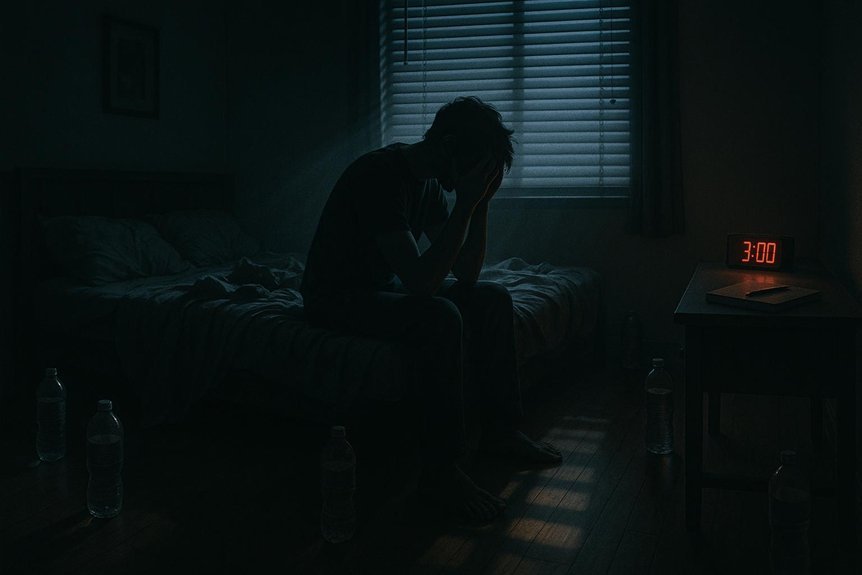
You're likely facing significant sleep challenges during alcohol detox, including insomnia, restlessness, and vivid nightmares. These issues stem from neurotransmitter imbalances and withdrawal symptoms, complicating sleep onset and maintenance. Physical discomfort like night sweats and chills can worsen the situation, making restful sleep elusive. Understanding these disruptions is essential for recovery, but how can you effectively manage them and guarantee better rest during this tough period?
Immediate Steps to Improve Sleep During Detox
When tackling sleep issues during alcohol detox, it’s crucial to establish a calming bedtime routine.
Start with good sleep hygiene by maintaining a consistent sleep schedule, even on weekends. Keep your bedroom cool, dark, and quiet to create an ideal sleep environment.
Integrate relaxation techniques like deep breathing or progressive muscle relaxation before bed to ease tension. Limiting caffeine and electronic use in the evening can also improve your sleep quality.
Consider a warm bath or reading a book to unwind. By prioritizing these steps, you can enhance your ability to fall asleep and stay asleep during detox.
How Alcohol Detox Disrupts Your Sleep
During alcohol detox, your sleep is often disrupted due to neurotransmitter imbalances that affect brain function.
Withdrawal-induced insomnia can make falling and staying asleep challenging, while changes in your circadian rhythm further impact sleep quality.
Understanding these disruptions is essential for managing sleep problems effectively during detox.
Neurotransmitter Imbalance Effects
Alcohol detox disrupts sleep by causing neurotransmitter imbalances that affect your brain’s chemistry.
During detox, neurotransmitter fluctuations can lead to altered serotonin levels and a compromised GABA receptor function. This imbalance impacts your brain chemistry, contributing to dopamine deficiency.
As a result, your sleep architecture becomes irregular, affecting the quality of rest. Mood stabilization is also challenged, making you more susceptible to mood swings.
Additionally, your stress response can heighten, further disrupting sleep patterns. Understanding these changes is essential for managing your sleep during detox, as your body works to regain equilibrium and improve overall well-being.
Withdrawal-Induced Insomnia
While managing alcohol detox, you might experience withdrawal-induced insomnia, a common issue stemming from the body's attempt to adjust. Your body, accustomed to alcohol's sedative effects, struggles to find balance, leading to disrupted sleep.
Implementing effective sleep hygiene can help. Maintain a consistent bedtime, create a restful environment, and avoid screens before bed. Incorporating relaxation techniques, such as deep breathing or progressive muscle relaxation, can ease anxiety and facilitate sleep onset.
Scientific evidence supports these practices as beneficial for improving sleep quality during detox. Prioritizing these strategies can greatly enhance your recovery process and restore restful sleep.
Circadian Rhythm Disruption
When you're going through alcohol detox, your circadian rhythm often becomes disrupted, making it difficult to maintain a regular sleep-wake cycle.
Alcohol impacts the body's internal clock, leading to circadian misalignment. This misalignment can cause fragmented sleep cycles, leaving you feeling exhausted.
During detox, your body endeavors to reset its natural rhythms, but this process can be challenging. Reduced melatonin production further complicates sleep, delaying the onset of rest.
Studies show that restoring a balanced circadian rhythm is essential for recovery. Implementing consistent sleep schedules and exposure to natural light can help realign your body’s clock and improve sleep quality.
Understanding Sleep Patterns in Withdrawal
During alcohol withdrawal, sleep patterns often undergo significant disruption. Your sleep architecture can become fragmented due to withdrawal symptoms, affecting how you progress through sleep stages.
Sleep patterns can fragment during alcohol withdrawal, disrupting progression through sleep stages.
To manage this, consider:
- Sleep hygiene: Maintain a consistent bedtime routine to support emotional regulation and minimize behavioral changes.
- Anxiety management: Employ relaxation techniques like deep breathing or meditation to ease nighttime anxiety.
- Medication options: Consult a healthcare provider for safe medications that may aid in stabilizing your sleep pattern.
Common Sleep Problems During Detox
During alcohol detox, you might experience insomnia and restlessness, which can greatly disrupt your sleep.
Night sweats and chills are also common, often causing discomfort and further sleep disturbances.
Additionally, vivid dreams and nightmares can occur, making nights particularly unsettling.
Insomnia and Restlessness
Struggling with insomnia and restlessness is a common challenge during alcohol detox. You might find it hard to fall asleep or stay asleep, disrupting your recovery.
To improve sleep quality, focus on sleep hygiene and relaxation techniques. Here’s how:
- Establish a Routine: Go to bed and wake up at the same time daily to regulate your body clock.
- Create a Relaxing Environment: Keep your bedroom cool, dark, and quiet to promote restful sleep.
- Practice Mindfulness: Engage in deep breathing or meditation to calm your mind before bed.
These steps can help ease insomnia and promote recovery.
Night Sweats and Chills
While managing alcohol detox, experiencing night sweats and chills can disrupt your sleep and recovery. These symptoms often result from impaired temperature regulation and anxiety spikes.
To combat this, focus on your hydration needs and consider comfort measures like breathable clothing choices. Optimize your sleep environment by keeping it cool and using light bedding.
Implement relaxation techniques, such as deep breathing, to help ease anxiety. Adjusting these factors can greatly improve your sleep quality during detox.
Vivid Dreams and Nightmares
Managing night sweats and chills is just one part of the sleep challenges faced during alcohol detox. You may also experience vivid dreams and nightmares due to changes in brain chemistry.
Understanding dream analysis can help you make sense of these intense sleep experiences. Identifying nightmare triggers is vital for reducing their frequency and impact.
Consider these strategies:
- Maintain a sleep schedule: Consistency helps regulate your sleep cycle.
- Relaxation techniques: Deep breathing or meditation can ease anxiety.
- Limit stimulants: Avoid caffeine and nicotine, which can exacerbate vivid dreams.
Managing Insomnia: Practical Tips
During alcohol detox, sleepless nights can be a significant hurdle, but practical strategies can help you manage insomnia effectively.
Focus on sleep hygiene by establishing a consistent bedtime routine. Implement relaxation techniques like meditation practices and breathing exercises to ease stress. Consider cognitive behavioral therapy for targeted stress management.
Optimize your sleep environment by addressing environmental factors such as noise and lighting. Lifestyle adjustments, like reducing caffeine and electronics before bed, can also make a difference.
Achieving restful sleep is challenging, but with these methods, you can create a supportive atmosphere for better rest during detox.
Natural Remedies for Better Sleep
Although alcohol detox can disrupt your sleep, natural remedies offer effective solutions. Prioritize sleep hygiene by creating a relaxing bedtime routine. Consider incorporating:
- Herbal teas: Chamomile or valerian root can promote relaxation.
- Aromatherapy oils: Lavender oil may enhance sleep quality when diffused or applied to your skin.
- Warm baths: A soothing soak can help lower body temperature and induce sleepiness.
Enhance relaxation with meditation techniques or breathing exercises, reducing stress and anxiety.
Calming music can also prepare your mind for rest. These strategies, grounded in evidence, can support better sleep during detox.
Staying Rested Long-term in Sobriety
While achieving long-term sobriety, maintaining restful sleep is essential for overall well-being. Focus on sleep hygiene by establishing a consistent sleep schedule. Optimize your sleep environment: dark, cool, and quiet works best. Engage in relaxation techniques like breathing exercises and mindfulness practices to ease stress. Incorporate healthy habits such as regular exercise and balanced nutrition.
Consider cognitive therapy if sleep issues persist, but avoid relying solely on sleep aids. Here’s a quick guide:
| Strategy | Benefit |
|---|---|
| Sleep Hygiene | Improves sleep quality |
| Sleep Environment | Enhances relaxation |
| Relaxation Techniques | Reduces stress |
| Mindfulness Practices | Boosts mental clarity |
| Cognitive Therapy | Addresses sleep issues |
Stay committed to these strategies for continued restful nights.


