Medication Management in PHP
You're about to explore how medication management in Partial Hospitalization Programs (PHP) can greatly impact mental health recovery. By focusing on tailored plans, side effect monitoring, and effective communication, PHPs guarantee that patients receive the individualized support they need. This approach not only supports patients but also enhances adherence to treatment. Interested in learning about how collaboration and innovation play a role in this process? Let's uncover the essential elements that drive successful outcomes.
Understanding Partial Hospitalization Programs
When exploring mental health treatment options, understanding Partial Hospitalization Programs (PHPs) is essential. PHPs offer a structured environment with flexible treatment duration, allowing you to engage in intensive therapy while maintaining daily life.
Program accessibility guarantees you can easily attend sessions, enhancing patient engagement. Staff training is exceptional, ensuring you receive individualized care tailored to your needs.
Outcome measurement tracks your progress, helping refine your treatment plan. Insurance coverage often includes PHPs, making them a viable option financially.
Community resources support your path forward, offering additional assistance. Accept the thorough care PHPs provide for your mental health recovery.
How Medication Supports Mental Health Recovery
In your mental health recovery path, medication plays an essential role by balancing brain chemistry, which can greatly reduce symptoms.
This reduction not only alleviates distress but also enhances the effectiveness of therapeutic interventions.
Balancing Brain Chemistry
Understanding how medication aids in mental health recovery involves recognizing its role in balancing brain chemistry. By addressing brain imbalances, medications optimize neurotransmitters, promoting mood stabilization and cognitive enhancement.
emotional regulation improves as medication timing and dosage personalization are carefully managed. It’s essential to focus on side effect management to guarantee you feel helped in your treatment.
Accepting whole-person approaches alongside medication can further enhance your well-being. Remember, medication is just one part of the puzzle, working to support your recovery by creating a stable foundation for a healthier mind and a more balanced life.
Reducing Symptoms Effectively
While managing your mental health recovery, medication plays an essential role in effectively reducing symptoms.
By consistently tracking your symptoms, you can identify patterns and see how medication impacts your well-being. Regular medication reviews with your healthcare provider guarantee that your treatment plan remains ideal and tailored to your needs.
These reviews help adjust dosages or change medications if necessary, enhancing your recovery.
To maximize success:
- Consistently track symptoms to see progress and needs.
- Schedule regular medication reviews for ideal adjustments.
- Communicate openly with your healthcare team about any changes or concerns.
This proactive approach helps you in your recovery.
Enhancing Therapy Outcomes
When integrated effectively, medication can greatly enhance therapy outcomes in mental health recovery.
By promoting medication adherence and developing compliance strategies, you build patient support and strengthen therapeutic alliances.
It's vital to manage side effects and improve medication literacy to encourage treatment motivation.
Comprehensive approaches that combine medication with individualized care create effective recovery pathways.
Understanding your unique needs guarantees that medication supports rather than hinders your progress.
Collaborate with healthcare providers to tailor treatments and address any concerns.
With commitment and informed choices, medication can be a powerful tool in your mental health recovery process.
Liberation Way's helpline is free, confidential, and available 24/7. A treatment specialist can help you understand your options.
Call (866) 275-3142Core Elements of Medication Management Success
Managing medications effectively in a Partial Hospitalization Program (PHP) requires a structured approach that guarantees patient safety and therapeutic efficacy.
Enable your patients by enhancing medication literacy, addressing adherence challenges, and supporting a strong therapeutic alliance.
Develop individualized planning and adopt whole-person approaches, considering cultural factors and reducing stigma.
Provide support during transitions and conduct thorough assessments to guarantee continuity and safety.
- Patient Help: Boost confidence through medication literacy.
- Therapeutic Alliance: Build trust to overcome adherence challenges.
- Individualized Planning: Tailor strategies with cultural considerations for effective outcomes.
This structured method promotes success in medication management within PHP settings.
Collaborating With Healthcare Teams
Effective collaboration with healthcare teams is vital for successful medication management in a Partial Hospitalization Program (PHP). You need to focus on team dynamics to overcome communication barriers.
Interdisciplinary collaboration guarantees role clarity, which is essential for effective case management. Emphasize conflict resolution to encourage a healthy environment for shared decision-making.
Treatment integration requires addressing coordination challenges, making sure every team member understands their role. Use feedback loops to continually assess and improve processes.
Involving Families in Treatment Plans
Although involving families in treatment plans can sometimes be challenging, it's essential for optimizing care in a Partial Hospitalization Program (PHP). Your active participation in treatment collaboration strengthens support networks and enhances communication strategies.
Involving families in treatment plans can be challenging yet vital for optimizing care in a Partial Hospitalization Program.
By understanding family dynamics and caregiver roles, you can develop shared decision-making and provide critical emotional support.
- Engage in family therapy: It helps address family dynamics and improves communication.
- Utilize educational resources: Equip families with knowledge to support recovery.
- Encourage shared decision making: Involve families in planning, respecting their insights and experiences.
Together, these strategies guarantee a thorough approach to treatment and recovery.
Identifying Patient Needs and Preferences
How do you guarantee that patient care is truly patient-centered in a Partial Hospitalization Program (PHP)?
Start with individualized assessments to uncover patient preferences and treatment goals. Address cultural considerations and lifestyle factors to tailor care effectively.
Overcome communication barriers by actively listening and building trust through personal experiences. Use feedback mechanisms to refine your approach, ensuring patients feel heard and valued.
Encourage open decision-making processes that respect their unique needs. By prioritizing these elements, you create a supportive environment where patients are enabled and engaged in their care, leading to more successful treatment outcomes in PHP.
Creating a Personalized Medication Strategy
In a Partial Hospitalization Program, ensuring patient-centered care extends into the domain of medication management. You’ll focus on creating individualized plans that align with personalized goals and medication preferences.
Consider lifestyle factors and engage patients actively to enhance treatment adherence. Use tailored approaches for dosage optimization, identifying barriers to create comprehensive strategies.
- Identify Barriers: Understand challenges impacting adherence.
- Engage Patients: Encourage active participation in decision-making.
- Optimize Dosages: Tailor medication plans to individual needs.
Ensuring Medication Adherence
When it comes to guaranteeing medication adherence in a Partial Hospitalization Program, understanding the underlying reasons for non-compliance is vital.
Implement effective adherence strategies like using pill reminders and maintaining medication logs.
Address treatment barriers by improving health literacy through motivational interviewing.
Encourage family involvement to reinforce behavioral cues and provide patient incentives.
Support groups can offer additional encouragement and accountability.
It's essential to identify and address specific challenges, tailoring solutions to individual needs.
Early Detection of Side Effects
To manage medications effectively in PHP, you need to recognize initial symptoms of side effects promptly.
Stay vigilant by closely monitoring patient responses to guarantee any adverse reactions are identified early.
Recognizing Initial Symptoms
Although it might seem overwhelming at first, recognizing initial symptoms of medication side effects is essential for effective management in a Partial Hospitalization Program (PHP).
Developing symptom awareness allows for early intervention, preventing complications. Pay attention to stress triggers, emotional cues, and behavioral changes. Look for cognitive signs or physical manifestations that indicate something’s off.
Overcoming communication barriers with healthcare providers can enhance patient insights and coping strategies.
- Emotional cues: Notice shifts in mood or irritability.
- Behavioral changes: Watch for altered habits or routines.
- Cognitive signs: Identify any confusion or memory issues.
Stay proactive to guarantee a smoother path to recovery.
Monitoring Patient Responses
Effective monitoring of patient responses is vital for the early detection of medication side effects in a Partial Hospitalization Program (PHP). You need to prioritize patient engagement and response tracking through methods like symptom journaling.
Establish clear feedback loops to facilitate timely dosage adjustments and medication reviews. Side effect monitoring guarantees treatment adherence, while patient education helps overcome communication barriers.
It’s imperative to create an environment where patients feel comfortable sharing their experiences. By doing so, you’ll enhance the effectiveness of the treatment plan and make sure any adverse effects are addressed promptly, maintaining the overall well-being of your patients.
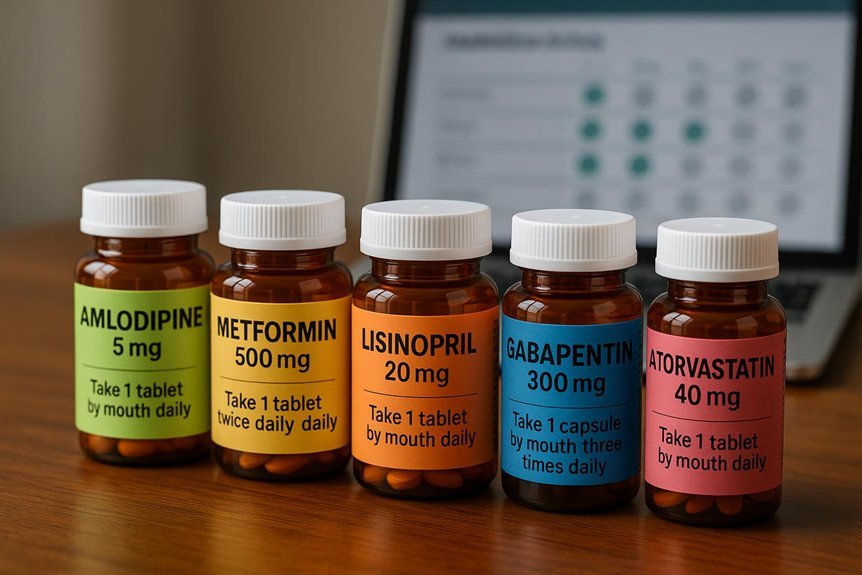
Managing Multiple Prescriptions Safely
- Stay alert to drug interactions: Understand potential conflicts between medications.
- Use tracking tools: Keep prescriptions organized and updated.
- Collaborate with pharmacies: Verify accurate information and dosage adjustments.
Why Regular Reviews Matter
Managing multiple prescriptions requires vigilance, as you've seen, but understanding why regular reviews matter takes your medication management to the next level.
Regular reviews enhance medication safety and support you, the patient, by reinforcing treatment adherence. They support strong healthcare partnerships through consistent review frequency, creating effective feedback loops.
This collaboration offers decision-making support, ensuring therapy integration aligns with your needs. Outcome tracking during reviews allows for precise symptom assessment, optimizing your treatment plan.
Applying Technology for Management
When it comes to managing your medications, technology offers powerful tools to streamline and enhance the process. Digital tools and mobile apps provide automated reminders to guarantee you never miss a dose.
With telehealth integration and virtual consultations, you can easily connect with healthcare providers. Patient portals give you access to electronic records and medication tracking, while data analytics and AI algorithms personalize your care plan.
Connect effortlessly with providers via telehealth, access records through patient portals, and enjoy personalized care with AI-driven plans.
These innovations transform how you manage your health.
- Mobile apps: Set automated reminders and track medications.
- Patient portals: Access electronic records and consult virtually.
- AI algorithms: Use data analytics for personalized medication plans.
Preventing Medication Errors
To effectively prevent medication errors, guarantee that prescription entries are precise and double-checked.
You must also establish clear communication strategies with patients, addressing their questions and confirming their understanding of dosage and timing.
Accurate Prescription Entry
Ensuring accurate prescription entry is critical in preventing medication errors and enhancing patient safety. You must prioritize prescription accuracy to minimize risks.
Implement thorough systems to verify each entry meticulously. Here's how you can achieve this:
- Double-check entries: Always verify medication names, dosages, and patient information.
- Use electronic systems: Apply technology to reduce human error and streamline processes.
- Regular training: Keep your team updated on best practices and error prevention techniques.
Patient Communication Strategies
Building on the importance of accurate prescription entry, effective patient communication strategies play an essential role in preventing medication errors.
Use active listening and empathy training to understand patient feedback, building trust through transparent dialogue. Employ motivational interviewing and tailored messaging to help patients, ensuring information sharing is clear and concise.
Draw on digital platforms and educational resources to enhance understanding, while being mindful of cultural sensitivity and non-verbal cues.
Develop trust-building strategies that promote patient support and utilize support networks to reinforce learning.
Educating Patients on Safe Use
When it comes to medication management in a Partial Hospitalization Program (PHP), educating patients on the safe use of their prescriptions is essential. You need to focus on patient education to guarantee medication safety and improve adherence strategies.
Emphasize the importance of side effect awareness and informed consent. Address communication barriers and consider cultural considerations. Involve family members to support dosage understanding and set realistic treatment expectations.
Side effect awareness and informed consent are key; involve family to bridge communication and cultural gaps.
- Enhance patient education: Tailor information to individual needs for better understanding.
- Promote family involvement: Encourage family support in medication routines.
- Address cultural considerations: Respect cultural differences in medication beliefs.
How Lifestyle Affects Medication
Your lifestyle choices markedly impact how medications work. Certain foods can interact with drugs, altering their effectiveness, while regular exercise can enhance medication efficacy and overall health.
Understanding these interactions helps you optimize your treatment and improve outcomes.
Diet and Drug Interactions
Although it might seem straightforward, the relationship between diet and medication can greatly impact your health. Your dietary choices, like meal timing and food sensitivities, affect medication absorption.
Caffeine interactions and alcohol effects can alter how drugs work, while herbal remedies might interfere. Nutrient deficiencies or excess sugar intake can influence your metabolic rates, and dietary restrictions, such as vegetarian diets, might cause nutrient interactions.
Cooking methods also play a role in nutrient retention. Maintaining gastrointestinal health and hydration levels is essential, especially during fasting impacts or weight fluctuations. Your immune responses and health conditions are closely linked to these factors.
- Dietary Supplements: Affect medication absorption
- Caffeine Interactions: Alter drug efficacy
- Meal Timing: Influences drug effectiveness
Exercise and Medication Efficacy
Engaging in regular exercise can greatly influence how your body metabolizes medication, impacting its overall efficacy. Physical activity enhances treatment outcomes by improving medication absorption and reducing side effects. To maximize benefits, consider medication timing in relation to your fitness routines. Exercise impact on mental health is significant, promoting adherence to both exercise and medication regimens.
| Factor | Influence |
|---|---|
| Exercise Impact | Enhances absorption and efficacy |
| Medication Timing | Synchronize with exercise for best results |
| Physical Activity | Boosts mental health, reduces side effects |
| Exercise Adherence | Improves overall treatment outcomes |
Incorporating these strategies guarantees peak health.
Blending Behavioral Therapies With Medication
While integrating behavioral therapies with medication, the synergy between these approaches can markedly enhance treatment outcomes in Partial Hospitalization Programs (PHP).
You’ll find that therapy integration supports medication synergy, creating a more whole-person approach. Behavioral medication aligns with mental health, ensuring therapy collaboration helps create personalized treatment.
- Therapeutic strategies: Combine cognitive-behavioral techniques with medication to improve coping skills.
- Medication adherence: Reinforce consistent medication use through integrated therapeutic support.
- Treatment continuity: Maintain a seamless flow between therapy and medication for sustained recovery.
This alignment promotes enduring benefits, addressing individual needs and enhancing overall treatment effectiveness in PHPs.
Managing Medication Adjustments
To effectively manage medication adjustments, you need to closely monitor dosage changes and communicate regularly with healthcare providers.
It's vital to track any side effects and guarantee the medication continues to meet therapeutic goals.
Monitoring Dosage Changes
When managing medication adjustments, it's crucial to monitor dosage changes carefully to guarantee both efficacy and safety.
Utilize monitoring tools to track dosage schedules and maintain adherence. Maintain medication logs and side effect diaries to capture patient feedback and identify therapeutic windows. Regularly review prescriptions to adjust dosage as needed.
- Medication Tracking: Use apps or logs to keep accurate records of dosage adherence.
- Patient Feedback: Encourage sharing of experiences and side effects for timely adjustments.
- Dosage Adjustments: Evaluate data to fine-tune medication for peak therapeutic outcomes.
Implementing these strategies guarantees effective and safe medication management.
Communicating With Healthcare Providers
Effective communication with healthcare providers is vital for managing medication adjustments. Build patient-provider rapport through effective dialogue and active listening.
Overcome communication barriers by enhancing health literacy and using feedback mechanisms. Trust building is essential, so build treatment transparency and engage in shared decision making.
To guarantee care coordination, discuss your treatment plan openly and clarify any doubts. Always express concerns and ask questions to facilitate understanding.
Treating Substance Use With Medication
Although recovery from substance use can be challenging, medication-assisted treatment (MAT) offers a reliable path toward achieving sobriety. MAT can greatly ease substance withdrawal symptoms and enhance your overall recovery process.
By adhering to prescribed medications, you can improve your chances of success and maintain stability.
Consider these benefits of MAT:
- Reduced Cravings: Medications help decrease cravings, making it easier to focus on your recovery.
- Stabilized Brain Chemistry: MAT supports brain function, reducing relapse risks.
- Improved Treatment Outcomes: Consistent medication adherence enhances the effectiveness of your treatment plan.
Adopting MAT can enable you on your path to recovery.
Evaluating Recovery Progress
As you begin your recovery process, evaluating your progress becomes vital to guaranteeing long-term success.
You'll need to focus on recovery benchmarks and patient engagement to stay on track. Outcome assessments help you understand how effective your treatment is, while therapy integration provides a comprehensive approach.
Symptom tracking is essential; it helps you identify patterns and adjust as needed. Enhancing your medication literacy enables you to make informed decisions.
Celebrate recovery milestones to motivate yourself. Establish feedback loops with your healthcare team to refine strategies continuously.
This all-encompassing approach guarantees you’re actively participating in your path to recovery.
Future Trends in Medication Management
The path to recovery involves not just understanding your current progress but also anticipating future advancements in medication management.
Take on digital innovations and predictive analytics to enhance personalized therapies. Telehealth integration and artificial intelligence promise improved patient engagement and medication adherence through remote monitoring.
Data-driven strategies will support you with future technologies, ensuring precise and efficient care.
- Digital Innovations: Revolutionize your treatment plans with cutting-edge technology.
- Predictive Analytics: Anticipate health trends and tailor therapies effectively.
- Remote Monitoring: Maintain adherence and engagement without leaving home.
Stay informed to use these advancements for optimal recovery and management.