IOP for Women
You might be wondering how an Intensive Outpatient Program (IOP) tailored for women can make a difference in your mental health experience. These programs offer a unique blend of therapeutic support, addressing emotional needs while building resilience. By focusing on trauma-informed care and comprehensive wellness, IOPs support you to set personal goals and boost self-advocacy. Interested in learning about how this structured support can transform your life?
Understanding IOP: What It Is
When considering treatment options for mental health, understanding Intensive Outpatient Programs (IOP) is essential.
IOPs offer personalized support through whole-person approaches and evidence-based practices. You'll engage in group dynamics that support therapeutic relationships vital for your self-discovery process.
These programs help you build emotional resilience and develop effective coping mechanisms. By focusing on individual goals, IOPs guide you through recovery milestones tailored to your unique needs.
Building emotional resilience and developing coping mechanisms, IOPs tailor recovery milestones to your unique needs.
The structured environment encourages active participation, ensuring that you progress steadily. With a commitment to your well-being, IOPs help you to manage challenges and accept sustainable recovery strategies.
Why Women-Specific IOPs Matter
You’ll find that women-specific IOPs effectively address unique emotional needs by offering tailored therapeutic approaches.
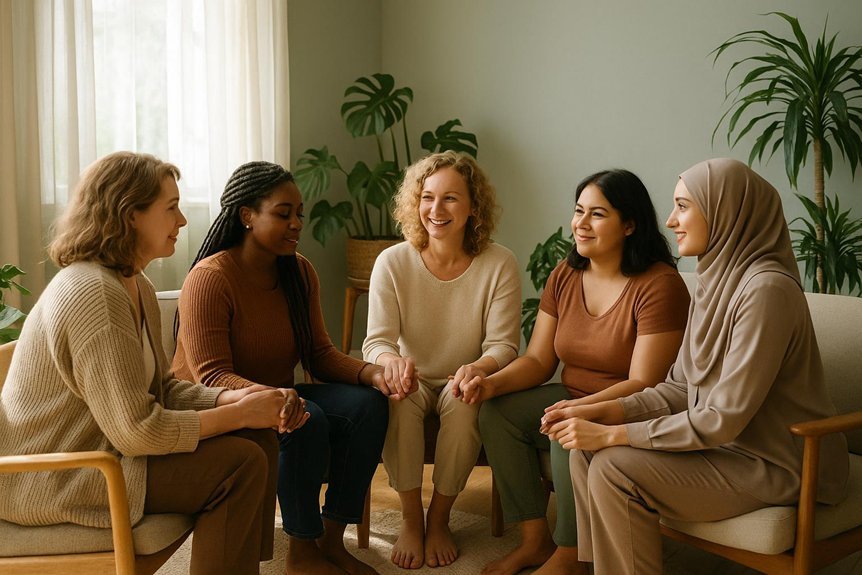
They create supportive communities where you can connect with others facing similar challenges.
These programs enable you through shared experiences, encouraging resilience and personal growth.
Addressing Unique Emotional Needs
Although often overlooked, addressing the unique emotional needs of women in Intensive Outpatient Programs (IOPs) is essential for effective treatment.
Women face gender-specific challenges requiring:
- Emotional Resilience: Build strength using trauma-informed care and support strategies.
- Coping Mechanisms: Develop self-advocacy skills to manage relational dynamics and mental health stigma.
- Comprehensive Wellness: Focus on whole-person health, integrating mind and body practices.
- Community Support: Build connections that enhance emotional resilience and challenge societal norms.
Building Supportive Communities
Creating supportive communities is fundamental in women-specific Intensive Outpatient Programs (IOPs) because they address the distinct social and emotional needs women face.
Community engagement builds strong support networks, allowing you to connect with others through peer connections and mentorship opportunities.
Collaborative workshops and outreach programs enhance emotional literacy and relationship building, equipping you with essential skills.
Resource sharing and advocacy initiatives support you to access necessary tools and support, promoting personal growth.
These focused environments guarantee you’re surrounded by understanding and encouragement, crucial for working through challenges and building resilience.
Women-specific IOPs create a foundation for lasting, impactful change.
Helping Through Shared Experiences
Experiencing challenges together in a women-specific Intensive Outpatient Program (IOP) encourages help through shared stories and mutual understanding.
These programs create spaces for transformative connections and emotional solidarity among participants. You’ll find that shared paths and resilience stories encourage:
- Enabling Narratives: Women share experiences, developing collective healing and sisterhood bonds.
- Mutual Support: Healing circles provide a safe environment for open dialogue and support.
- Collaborative Growth: Participants grow together through shared challenges and victories.
- Emotional Solidarity: Strong bonds form, leading to a supportive network essential for recovery.
Women-specific IOPs matter because they harness the power of these connections.
Liberation Way's helpline is free, confidential, and available 24/7. A treatment specialist can help you understand your options.
Call (866) 275-3142Top Benefits Women Gain From IOP
When considering the benefits of Intensive Outpatient Programs (IOP) for women, it's clear that these programs offer tailored support vital for recovery.
You’ll develop self-advocacy skills, supporting you to voice your needs and make informed decisions about your treatment.
IOPs also focus on building emotional resilience, helping you manage stress and get through challenges effectively.
By participating in these programs, you gain access to expert guidance and peer support, which are essential in supporting a supportive environment.
The structured approach of IOPs guarantees you receive thorough care while still maintaining autonomy, greatly enhancing your recovery.
Balancing Therapy With Daily Life
Integrating therapy into your routine requires strategic time management and clear prioritization of daily tasks.
Research shows that setting specific goals and creating a structured schedule can considerably enhance the effectiveness of your treatment.
Integrating Therapy Into Routine
Balancing therapy with daily life requires deliberate planning and commitment. You can integrate therapy into your routine by incorporating therapeutic rituals and mindfulness practices. Here’s how:
- Daily Affirmations and Self-Reflection: Start your day with positive affirmations and self-reflection exercises to maintain focus and clarity.
- Journaling Techniques: Use journaling to process emotions and track progress. It reinforces gratitude habits and emotional check-ins.
- Routine Adjustments: Make small changes to your schedule to prioritize stress management and healthy boundaries.
- Gratitude and Mindfulness: Cultivate gratitude habits and mindfulness practices to enhance mental well-being and encourage resilience.
Implement these strategies consistently.
Managing Time and Priorities
Effectively managing time and priorities is essential for balancing therapy with daily life. Implement time management by setting priorities and using effective scheduling. Establish personal boundaries to guarantee goal alignment. Use productivity techniques like time blocking strategies and urgency assessment to optimize tasks. Engage in self-reflection practices to evaluate your progress.
| Task | Priority Level | Time Block |
|---|---|---|
| Therapy Session | High | 10:00 - 11:00 |
| Work Assignments | Medium | 1:00 - 3:00 |
| Family Time | High | 6:00 - 8:00 |
| Self-Reflection | Medium | 9:00 - 9:30 |
| Delegate Tasks | Low | Ongoing |
Delegate tasks when possible to maintain balance.
Addressing Work-Life Challenges for Women
When juggling multiple roles, women often face unique work-life challenges that can affect both personal and professional spheres.
To achieve work-life integration and manage stress effectively, consider these strategies:
- Set Personal Boundaries: Clearly define when you'll work and when you'll focus on family responsibilities. This helps in burnout prevention and enhances time efficiency.
- Apply Mentorship Opportunities: Seek guidance to align career aspirations with life changes, boosting confidence and emotional resilience.
- Build a Supportive Network: Engage in professional networking and assertiveness training to develop workplace support and self-advocacy.
- Practice Self-Reflection: Regularly assess relationship dynamics and health priorities to maintain balance and financial independence.
Managing Family Dynamics Through Therapy
As family dynamics evolve, therapy becomes an essential tool for guiding challenges and building understanding. Effective family communication is vital for resolving conflicts and managing emotional boundaries.
Therapy techniques help you work through complex relationship dynamics and address parenting challenges. By understanding family roles and sibling relationships, you can create healthier support systems.
Getting through complex dynamics and understanding roles helps create healthier family support systems.
Addressing generational differences is key to improving interactions and ensuring harmony. Through therapy, you learn conflict resolution skills that promote lasting peace.
You’ll gain insight into your family's unique patterns, helping you to support a nurturing environment. Therapy provides the framework for healthier, more connected family relationships.
Tailored Therapeutic Approaches for Women
Understanding the unique challenges women face, tailored therapeutic approaches are essential for addressing their specific mental health needs.
By focusing on gender-specific therapies, you can effectively enhance your emotional intelligence and self-advocacy skills. Implementing mindfulness techniques supports whole-person wellness, while trauma-informed care guarantees safety and healing.
Engaging in group dynamics offers a platform for support strategies and boundary setting. Strengthen communication skills through these methods to build resilience.
Consider these key components:
- Mindfulness Techniques: Cultivate presence and reduce stress.
- Group Dynamics: Enhance support and understanding.
- Trauma-Informed Care: Prioritize safety and help.
- Self-Advocacy Skills: Build confidence and autonomy.
These strategies help women in therapeutic settings.
Building a Supportive Community in IOP
Building a supportive community in an Intensive Outpatient Program (IOP) amplifies the benefits of tailored therapeutic approaches. You’ll find that community bonding enhances emotional support and trust building. Engaging in social activities supports group dynamics and friendship networks, creating safety spaces for honest dialogue. Peer mentorship offers shared resources and collaboration opportunities, essential for personal growth.
| Benefit | Description |
|---|---|
| Community Bonding | Enhances emotional support |
| Peer Mentorship | Provides shared resources |
| Social Activities | Strengthens group dynamics |
How IOP Builds Resilience
Resilience thrives in an Intensive Outpatient Program (IOP) through structured support and targeted interventions.
You will see resilience strategies that enable you to face life's challenges with emotional strength.
Here's how IOP builds your growth:
- Coping Mechanisms: Learn adaptive skills to manage stress and adversity effectively.
- Community Support: Engage with peers who share similar experiences, enhancing your mental wellness.
- Personal Growth: Participate in activities that boost self-support and confidence.
- Self-Reflection: Develop insights into your behaviors and thought patterns, promoting personal development.
These elements build a thorough foundation, allowing you to manage life's hurdles with renewed resilience.
Sustaining Mental Health Long-Term
To sustain your mental health long-term, focus on building supportive networks that encourage connection and resilience.
Develop effective coping strategies that are evidence-based to manage stress and challenges.
Prioritize self-care practices, as research shows they’re essential for maintaining overall well-being.
Building Supportive Networks
While handling through the complexities of mental health, encouraging supportive networks stands as an essential pillar for long-term resilience.
Building these networks involves strategic steps that create a foundation of trust and emotional safety.
- Networking strategies: Actively seek mentorship opportunities to gain guidance and insight.
- Community engagement: Participate in local groups to enhance social connections and develop relationship building.
- Peer support: Join collaborative initiatives to share resources and experiences.
- Trust development: Cultivate environments where open communication thrives, strengthening emotional bonds.
Developing Coping Strategies
Strong supportive networks lay the groundwork for sustainable mental health, but developing effective coping strategies is equally essential. By integrating mindfulness techniques, you can enhance stress reduction and support resilience. Focus on practical methods that are evidence-based and easy to implement daily.
| Strategy | Benefit | Implementation |
|---|---|---|
| Mindfulness | Reduces stress | Daily meditation |
| Deep Breathing | Calms the mind | Use during anxiety |
| Journaling | Clarifies thoughts | Evening routine |
| Progressive Muscle Relaxation | Eases tension | Before sleep |
These strategies support you to manage challenges effectively, promoting long-term mental well-being.
Prioritizing Self-Care Practices
Although life's demands can be overwhelming, prioritizing self-care practices is essential for sustaining mental health long-term.
Adopt self-care routines to enhance emotional wellness through a whole-person approach. Here’s how:
- Mindfulness Practices: Cultivate awareness with relaxation techniques to manage stress effectively.
- Journaling Benefits: Write daily to process emotions, developing self-compassion and clarity.
- Healthy Boundaries: Set limits to protect your time and energy, nurturing relationships and promoting balance.
- Self-Compassion Strategies: Practice kindness toward yourself, enhancing resilience and emotional strength.
Implement these strategies to maintain mental well-being and enrich your life continuously.
Real-Life Success Stories
Inspiring stories abound when it comes to Intensive Outpatient Programs (IOP) for women. You’ll find help experiences highlighting transformative experiences that lead to personal growth.
Healing milestones mark your path, supported by a community that encourages resilience building. Strength showcasing becomes a shared narrative, as women celebrate recovery triumphs together.
Success reflections reveal the impact of these programs, proving they’re more than just therapy—they’re life-changing.
As you hear these stories, you’ll realize the power of connection and support, knowing that with determination and the right environment, recovery isn’t just a goal; it’s a celebrated reality.
Choosing the Right IOP for You
To choose the right Intensive Outpatient Program (IOP) for you, start by evaluating your personal needs to guarantee the program aligns with your recovery goals.
Evaluate program specializations, as evidence shows tailored approaches can enhance effectiveness.
Finally, consider location and accessibility to maintain consistent attendance and support your progress.
Assess Your Personal Needs
How do you determine the best Intensive Outpatient Program (IOP) for your unique needs? Start with targeted self-reflection exercises to gain insight. Consider these steps:
- Personal Goal Setting: Define what you want to achieve with an IOP. This clarifies your path and aligns treatment with your objectives.
- Emotional Readiness Assessment: Evaluate if you're emotionally prepared to engage fully. This involves mental health journaling and recognizing your motivation sources.
- Lifestyle Compatibility Check: Verify the program fits into your daily life, factoring in stress management techniques and personal values clarification.
- Support System Evaluation: Identify support networks and enhance self-advocacy skills for sustained success.
Evaluate Program Specializations
When choosing the right Intensive Outpatient Program (IOP) for your needs, it’s essential to evaluate program specializations thoroughly. Understanding specialization benefits can enhance program effectiveness, especially when tailored to gender differences.
Analyze treatment outcomes through case studies and research findings to confirm the program aligns with your goals. Participant feedback provides insight into success metrics and real-world experiences.
Reviewing theoretical frameworks and best practices helps you gauge the program’s foundation. By focusing on these elements, you’ll make an informed decision, maximizing your potential for success and confirming the program meets your unique needs and expectations.
Consider Location and Accessibility
Choosing the right Intensive Outpatient Program (IOP) involves more than just program content; location and accessibility play crucial roles in your decision.
Consider these factors:
- Location Accessibility: Confirm the facility is easy to reach via public transport or other transportation options.
- Community Resources: Evaluate proximity to services and local support to enhance recovery.
- Safety Considerations: Examine the environment’s impact on your well-being and the facility’s amenities.
- Virtual Access: If travel is challenging, check for virtual options to maintain consistency.
Common Misconceptions About Women’s IOP
Despite the growing awareness of Intensive Outpatient Programs (IOP) for women, several misconceptions persist.
Myths debunked include beliefs that women’s IOPs lack treatment effectiveness due to gender stereotypes. These programs address misunderstood needs with supportive frameworks that counter emotional stigma.
People often assume access barriers prevent participation, but awareness initiatives are actively dismantling these obstacles.
You might think IOPs can’t provide the necessary support, but evidence shows they’re tailored for women’s unique challenges.
Overcoming these misconceptions is essential for ensuring women receive the care they deserve, enabling them through effective and accessible mental health resources.
Your Next Steps for Mental Health Improvement
Starting your path forward to mental health improvement begins with understanding your options and taking decisive action.
Building self-advocacy skills and effective coping mechanisms is essential for success. Here's how you can take the next steps:
- Set Clear Goals: Define what you want to achieve. Clarity helps focus your efforts.
- Develop Self-Advocacy Skills: Learn to communicate your needs effectively and seek appropriate support.
- Practice Coping Mechanisms: Identify strategies that help manage stress and emotions, such as mindfulness or journaling.
- Engage in IOP: Intensive Outpatient Programs offer structured support, promoting recovery and resilience.
Take charge of your mental health path today.
FAQs: Addressing Your Concerns About IOP
Understanding the available resources is key to taking charge of your mental well-being. In an Intensive Outpatient Program (IOP), you'll explore group dynamics that bolster support systems and build emotional intelligence.
These settings promote stigma reduction, allowing for personal growth through shared experiences. Support strategies are integral, teaching self-advocacy techniques and resilience training.
Trauma-informed care guarantees a safe space for healing, while communication skills are honed to enhance relationships.
Addressing common concerns about IOP, it's essential to recognize the transformative potential of these programs in building strong coping mechanisms and supporting long-term mental health improvements.