
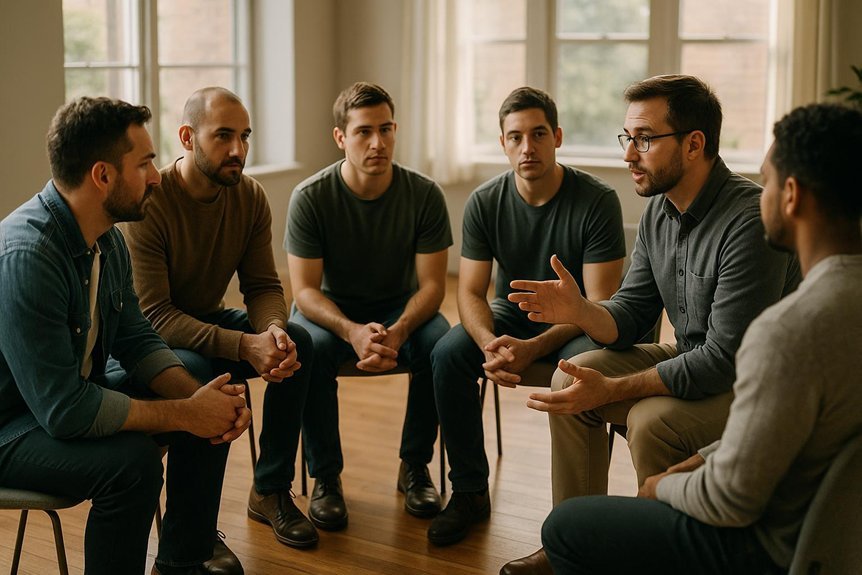
IOP for Men
You're exploring Intensive Outpatient Programs (IOPs) for men, which are pivotal in tackling mental health issues with structured flexibility. These programs enhance self-awareness and emotional expression, encouraging a judgment-free environment. By integrating mindfulness, therapeutic activities, and peer support, IOPs cultivate resilience and essential self-care strategies. Curious how these elements transform mental well-being and daily life? Let's examine the impact and unique approaches tailored specifically for men.
How IOPs Support Men's Mental Health
When it comes to addressing men's mental health, Intensive Outpatient Programs (IOPs) play an essential role by providing structured yet flexible treatment options.
They help you to engage in self-awareness practices, helping you recognize emotions and thought patterns. This increased awareness encourages healthier emotional expression, a crucial component for mental well-being.
IOPs offer a supportive environment where you can practice sharing feelings without judgment, encouraging growth and resilience.
Top Benefits of IOP for Men's Mental Well-being
Engagement in Intensive Outpatient Programs (IOPs) offers transformative benefits for men's mental well-being.
IOPs provide structured opportunities for developing self-care practices essential for maintaining mental health. By incorporating these practices, you create a solid foundation for resilience and stress management.
IOPs also encourage emotional expression, which is vital in breaking free from traditional masculine norms that often discourage vulnerability. This supportive environment helps create genuine connections and promotes emotional intelligence.
As you adopt these benefits, you'll experience improved mental clarity and a stronger sense of self, ultimately enhancing your overall quality of life.
Liberation Way's helpline is free, confidential, and available 24/7. A treatment specialist can help you understand your options.
Call (866) 275-3142Addressing Anxiety, Depression, and Substance Abuse
Here's a visual guide:
| Focus Area | Strategies | Benefits |
|---|---|---|
| Anxiety & Depression | Mindfulness practices | Emotional stability |
| Substance Abuse | Therapy options | Reduced substance effects |
| Overall Well-being | Peer connections | Stronger support networks |
Inside an IOP Session
An Intensive Outpatient Program (IOP) session offers a structured yet flexible approach to recovery, providing you with essential tools and support.
During these sessions, you’ll engage in dynamic group interactions that develop a sense of community and accountability. Evidence shows that sharing experiences and insights enhances personal growth and reinforces recovery goals.
Session dynamics involve guided discussions, therapeutic activities, and skill-building exercises. Facilitators lead with expertise, ensuring a safe and supportive environment.
You’ll learn coping strategies, stress management techniques, and relapse prevention methods. This collaborative process supports you to work through challenges with confidence and build a sustainable path forward.
Tailored IOP Approaches for Men
While every individual's process to recovery is unique, tailored IOP approaches for men acknowledge specific needs and challenges. You’ll find that these programs focus on masculine identity and emotional expression, addressing how societal expectations impact your recovery process. By developing a safe environment, you’re encouraged to explore emotions without judgment.
| Focus Area | Description |
|---|---|
| Masculine Identity | Understanding societal pressures and roles. |
| Emotional Expression | Encouraging open dialogue about feelings. |
| Peer Support | Building connections with others facing similar challenges. |
In these tailored sessions, you’ll gain insights and strategies to manage your path, enhancing personal growth and resilience.
Resilience and Coping Strategies for Men
When building resilience and coping strategies, it’s essential to focus on techniques that specifically address men’s unique challenges. Accepting emotional expression and vulnerability acceptance can greatly enhance your ability to cope with stress.
Evidence suggests that men often benefit from tailored approaches that consider societal expectations and personal experiences.
To strengthen resilience:
- Acknowledge emotions: Recognize feelings without judgment.
- Seek support: Connect with peers or professionals.
- Practice mindfulness: Focus on the present moment.
- Set realistic goals: Break tasks into manageable steps.
- Engage in physical activity: Boost mental health through exercise.
Balancing IOP With Daily Life
Research shows that building supportive environments, both at home and work, enhances treatment adherence and outcomes.
Prioritizing Mental Health Needs
Handling the demands of daily life while attending an Intensive Outpatient Program (IOP) can be challenging, yet prioritizing mental health is essential for long-term well-being.
Adopting mindfulness techniques and emotional expression helps balance your responsibilities. Focus on these key aspects:
- Mindfulness: Stay present and reduce stress.
- Emotional Expression: Open up to support healing.
- Self-care: Recognize your needs and act on them.
- Support Systems: Lean on friends and family for encouragement.
- Time Management: Allocate time wisely to avoid burnout.
Integrating Therapy Into Routine
Attending an Intensive Outpatient Program (IOP) involves more than just prioritizing mental health; it requires effectively integrating therapy into your daily routine.
Establishing consistent therapy routines is essential for success. Start by scheduling sessions at regular times, aligning them with your daily activities. Consider using digital tools to remind you of appointments and tasks, ensuring seamless daily integration.
Take on flexibility, adapting your routine as needed, while maintaining commitment. Research supports that structured integration enhances therapy outcomes, promoting sustained progress.
Building Supportive Environments
While participating in an Intensive Outpatient Program (IOP), creating a supportive environment is essential for balancing treatment with daily life.
Building strong support networks supports trust and positive reinforcement. Safe spaces and community building are vital for emotional expression and healing.
Engage in mentorship programs and seek accountability partners to strengthen your recovery. Accept peer support and group dynamics to develop trust.
Consider these steps:
- Cultivate safe spaces for open emotional expression.
- Engage in mentorship programs for guidance.
- Build peer support to enhance group dynamics.
- Establish accountability partners for ongoing motivation.
- Encourage positive reinforcement within your community.
Balancing IOP with daily life is achievable.